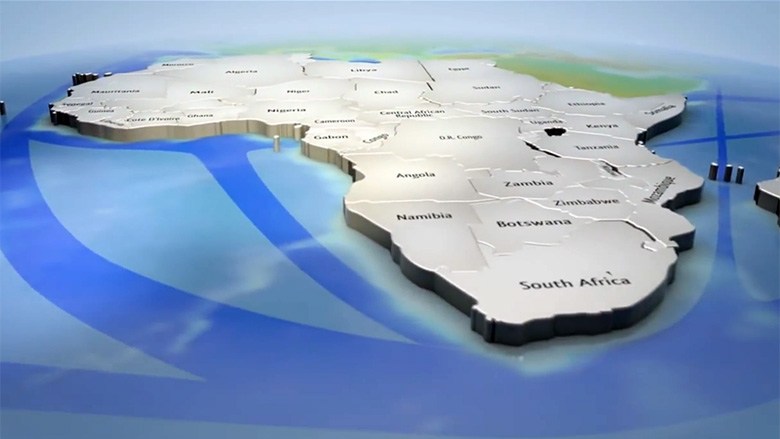
A surge in population, rapid urbanisation, the adoption and absorption of new technologies, as well as
the continued unlocking o...
A surge in population, rapid urbanisation, the adoption and absorption of new technologies, as well as
the continued unlocking of abundant resources and the deepening of the continent’s financial sector are
five prominent trends that are expected to propel Africa’s on-going economic reinvigoration in the next
four decades.
Democracy and a vibrant free enterprise are growing, making Africa a promising emerging market.
Governments are shifting the negative international perception by improving the business climates. The
continent is known for its abundance in natural resources, which include 90 per cent of the world’s
platinum, 50 per cent of the world’s gold,70 per cent of the world’s coltan (which the majority of cell
phones around the world use) and 30 per cent of the world’s diamond reserves. It is also the second
largest and second most-populous continent.
 As the global attention shifts towards Africa and other emerging markets as centres of
future growth, experts believe business and trade will be crucial to the continent continuing to realise
its economic growth potential.
Sub-Saharan Africa’s population is expected to explode to 2-billion by 2050, which will result in more
than a fifth of the world population being African. As a result, Africa’s population will become much
younger and more affluent. This major demographic shift will provide an array of opportunities and
challenges, and the continent’s economic. When coupled with robust economic growth, population growth
will support the emergence of the continent’s consumer base – providing support to local firms, creating
economic opportunities, and attracting foreign investment.
For countries able to provide the necessary institutional support, a youthful, and rising,
population has the potential to yield a demographic dividend, specially in Africa’s services and
manufacturing sectors.
More than half of Africa’s population will be living in urban areas by 2030 as the continent’s economy
continues to advance. By 2050, more than 60 per cent of the 2 billion people expected at the time will
be urbanised. This means that 800-million Africans will either migrate to or be born in urban areas in
the next four decades. African urban household incomes are more than double rural incomes.
Mobile phone subscriptions, internet and social media usage in Africa are expected to continue to surge
to record levels in the next five years as the continent’s people vigorously embrace communication
technologies. The availability and affordability of mobile and broadband services can, as it already has
in key markets, support economic growth and provide one of the means through which will fuel Africa’s
human capital advantage.
With food expected to become the “new oil” of the 21st century, Africa’s agricultural output is set for
explosive growth in coming decades as the continent’s largely untapped potential gains elevated
attention.
While Africa is known for its dominant share in a number of core commodities, such as platinum, chrome
and cobalt that are in great demand, agriculture is also expected to feature prominently as a key driving force in the continent’s resurgence.
In the near future, Africa’s agricultural fortunes are poised for a big change. There could be a
doubling in African agricultural output within the next decade.
Urbanisation and rising incomes are bringing more people in reach of financial institutions, and, in so
doing, giving a formal identity to swathes of the continent’s young and aspirant population. Meanwhile,
technology and pioneering innovative business strategies are allowing the financial sector unprecedented
reach.
All in all, Africa’s businesses are becoming increasingly attractive for local and foreign
investors – and as a result, Africa’s traditionally illiquid stock markets are growing, and private
equity funds are elevating in both size and stature.
A recent survey identified 17 African countries that will offer attractive Foreign Direct Investment
(FDI) opportunities in the next five years.
East Africa
Ethiopia
Ethiopia was among the 10 fastest growing economies in the world over the past decade. Its gold mines, and
the potential to exploit recently found natural gas reserves (currently 25 billion cubic metres) will
attract significant amounts of investment over the next few years.
Rwanda
Relative to its African counterparts, Rwanda’s resource endowment is poor; the country has no
significant natural resource, and its labour force is small and poorly educated. But offsetting these
negatives is Rwanda’s institutional environment. The government has actively tackled corruption in
recent years, and the business environment is extremely friendly. Significant investment has been made
to improve infrastructure.
Democratic Republic of Congo
The DRC’s oil and mineral reserves are among the riches in Africa, and the sheer potential will continue
to attract foreign investment, particularly as demand in the developed and emerging markets rises and
capacity constraints are met by other producers.
Kenya
Kenya
probably has the most highly developed economy in East Africa. It has a relatively well-educated and
rapidly growing labour force, and is most often used as a hub by multinationals looking to develop East
African markets.
Tanzania
Driven by the rising price of gold that has increased 75% over the last three years, Tanzania’s gold
reserves will continue to attract investor interest over the medium term. The country’s relatively
well-educated labour force, coupled with political stability and the government’s sound macroeconomic
management of the economy, will add to Tanzania’s attractiveness.
Uganda
Uganda’s vast mineral resources and a recent discovery of oil will attract significant amounts of
investments. The country’s relatively well-educated labour force, low levels of bureaucracy and
diversified economy will attract funds into the labour-intensive service sector too (e.g.,
communications and financial services).
Southern Africa
South Africa
South Africa’s substantial natural resource endowment will continue to attract investors, and its
comparatively well-educated labour force will draw funds into the non-resource sectors of its diverse
economy. Coupled with this, the domestic market is among the largest in Africa, the population is the
richest on average (although extreme income inequality means that many people remain in poverty) and the
institutional environment is relatively conducive to business.
Angola
Angola's FDI attractiveness is expected to rise between 2025–2050, driven by the "Angola 2050" long-term strategy, which aims to diversify the economy away from oil towards
agriculture, mining, and tourism. Key drivers would include infrastructure projects like the Lobito Corridor, privatization efforts (PROPRIV), and a shift toward private-sector-led growth.. Angola’s oil and mineral
reserves will continue to be the main attraction for investors over the next five years. Enriched by the
oil wealth, the country’s growing middle class will also be attractive to investors looking for new
markets.
Mauritius
Mauritius has a well-developed infrastructure network, a highly educated workforce, a comparatively high level of income and low levels of bureaucracy, all of which are
attractive to investors. Slightly offsetting these positives are labour market rigidities; in
particular, the centralised wage-setting mechanism and high levels of inequality.
Mozambique
Mozambique’s key attraction for investors is the recently established natural gas reserves, which
already stand at over 127 billion cubic metres. Coupled with this, significant improvements are being
made to the education system and the country’s infrastructure. Mozambique was one of the 10
fastest-growing economies in the world over the past decade, and this growth is likely to be sustained
for the foreseeable future.
Zambia
Zambia’s copper mines will continue to attract investors with global demand expected to keep prices
high.
West Africa
Nigeria
Nigeria’s oil reserves will continue to attract funds and a large proportion of FDI will be concentrated
in this sector. However, the large domestic market and diversified economy mean other sectors such as
communications, real estate and tourism will also attract attention.
Ghana
Ghana has a sizable resource endowment, including substantial mineral, gas and oil reserves. Oil and gas
industries will contribute to the majority of FDI flows. Increasing oil revenues should indirectly boost
other sectors. This is particularly true of infrastructure. Ghana benefits from a stable political
environment, with democracy well established and adhered to.
Senegal
Senegal has a sizable resource endowment, and its mineral resources make it an attractive location in
which to invest. Continued investment in mineral extraction will contribute to the majority of FDI
flows. Senegal also benefits from a stable political environment, with democracy well established. A
range of economic reforms have fostered a stable macroeconomic environment.
North Africa
Egypt
Egypt oil production is expected to fall as reserves mature and run dry, but the fossil fuel sector is
still expected to attract investors over the next five years. Bigger attractions for investors are Egypt’s
large, relatively well-educated population, sizeable domestic market and proximity to Europe.
Morocco
Morocco’s oil reserves provide some pull for investors, but its well-educated, relatively cheap labour
force is its prominent resource. Coupled with this, the country’s proximity to Europe and recently
signed trade agreements with the EU and the US, make it an attractive location for multinational
companies looking to service the lucrative market within the EU.
 These attractions are underpinned by good governance and sound macroeconomic policies.
As a result of these positives, Morocco is expected to attract significant amounts of FDI over the next
five years, with the expected focus of FDI inflows being in labour-intensive industries, such as tourism
and construction.
Tunisia
Although Tunisia’s oil reserves are modest, global capacity constraints mean they will continue to be
attractive to investors in the near future. A potentially more attractive resource at the country’s
disposal is its highly skilled labour, especially when it is coupled with Tunisia’s proximity to the
lucrative EU market. And although the domestic market is small, the country’s well-established
infrastructure network, good economic governance and business environment make it an attractive location
for multinational companies.