

The Southern African Development Community (SADC) announced on 9 May 2020 that it will be introducing the use of an Electronic Certificate of Origin (eCoO) system within all 16 member nations. The move will streamline the clearing of goods and save time and money for exporters. The SADC includes nearly all African countries south of the equator, including the Republic of South Africa, one of continent’s largest economies. According to the SADC announcement, it plans to launch a test of the eCoO system in the six member states of Botswana, Eswatini, Malawi, Namibia, Tanzania and Zambia before the end of May 2020. All six countries have recently developed their own national versions that will now be integrated into the regional framework platform developed for use by participant countries. Mauritius, another member nation, has already developed its own eCoO module and is currently ready to use it with other SADC member states. Upon successfully completing the trial, the eCoO system will then be expanded across all countries in the community. Its introduction should have a positive impact on trade with and within the region. An SADC statement said: “The implementation of the eCoO is expected to contribute to the reduction of non-tariff barriers to trade and enhance participation of SADC Member States in the regional value chain and ultimately, support successful implementation of the industrialisation strategy and roadmap in the consolidation of the SADC FTA. This eventually will lead to the improvement of SADC Member States in their ranking in ease of doing business.” The advantage of the electronic system is that it saves exporters time and money, as well as promoting greater harmonisation of trade protocols regionally. Under the current manual system, hard copy documents must be delivered by exporters to the approving authority; delivered back upon approval; and finally delivered to the importer. The electronic system enables documentation to be processed and approved online, and the approved certificate to then be delivered digitally by email or by express mail to the applicant in a short period of time.
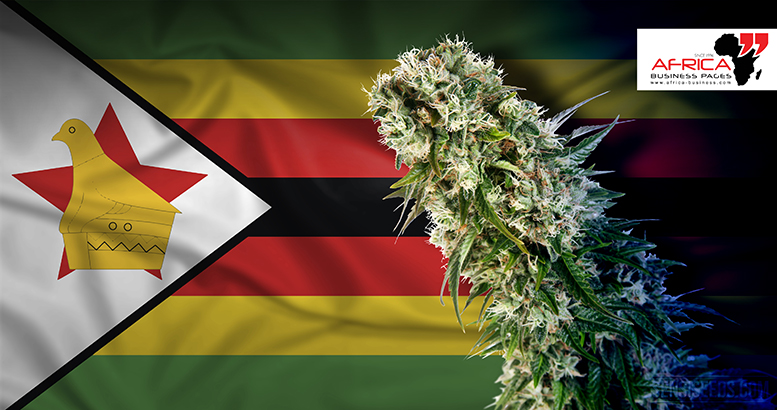
Zimbabwe Legalises Cannabis Farming to Boost Economy
folder_open Business Outlook , Pharmaceuticals , Southern Africa
Zimbabwe has legalised cannabis cultivation and has withdrawn laws requiring sole state ownership for cannabis farming in an effort to encourage investment in cannabis cultivation for industrial and medicinal uses. Demand for cannabis is projected to grow worldwide while tobacco output is expected to decline 15% by 2030, according to Meanwell Gudu, the CEO of Zimbabwe’s Tobacco Industry and Marketing Board. “One of the alternative crops we are looking at is industrial hemp,” he said. “We want to be part of the entire industrial hemp chain.” Tobacco earned Zimbabwe $819 million in revenue in 2021. Farming cannabis for medical use in Zimbabwe was first legalised in 2018. The board has 145,000 registered tobacco growers, who started selling 2022’s crop at international auctions recently. According to recent government initiatives, farmers in Zimbabwe will be encouraged to plant cannabis so that a quarter of their income comes from the plant by 2025. Sales of cannabis worldwide is forecast to reach $1.25 billion this year. Cannabis Exports from Zimbabwe Zimbabwe exported 30 tonnes of industrial hemp to Switzerland in 2022, its first foray into the European market, said Zorodzai Maroveke, the founder of the Zimbabwe Industrial Hemp Trust. The group is partnering with the tobacco board to facilitate the “smooth transition” to cannabis for commercial purposes. As of now, the government of Zimbabwe has licensed 57 foreign and local entities to grow medicinal cannabis in the country according to a recent statement by the Zimbabwe Investment and Development Agency. As a result, production has already begun at some of the licensed farms which are spread across the country. Cannabis, also called mbanje in Zimbabwe, is no unknown word to people today. It has many health benefits like fighting cancer, and 22 countries around the world legalised it for medicinal use. South Africa, Malawi, Zambia, and Lesotho have also legalised medicinal cannabis.

South Africa is wooing investors from the UAE to its attractive tourism sector by highlighting various investment opportunities in South Africa's travel and tourism industry. To this end, the South African Department of Tourism held a tourism investment seminar in Dubai to attract investors from the UAE. The seminar was part of an ongoing programme by the South African government to strengthen the investment ties between the UAE and South Africa, especially in the field of tourism. South Africa welcomed around 11 million tourism visitors in 2018, making it one of the most popular destinations on the continent. The tourism sector contributed three per cent to South African gross domestic product in 2018 and employs nearly 700,000 people. Headed by Shamilla Chettiar, Deputy Director-General, Destination Development, South African Department of Tourism, the 12-member delegation consisted of representatives from the Department of Tourism, provincial tourism promotion agency and the North West Tourism Board, South Africa’s Industrial Development Corporation, IDC, and project promoter, Incopho Coastal Resorts. During the investment seminar, guests were provided presentations and overviews regarding the marketing of South Africa as a tourist destination, detailed information regarding the investment landscape, opportunities and government support, as well as hearing first-hand experiences from a UAE investor in South Africa’s tourism industry. Private meetings were then held between potential investors and members of the South African delegation. "We are targeting the United Arab Emirates because of the high concentration of high-net-worth-individuals (HNI) with investable assets, as well as the growing outbound market from the Gulf region to South Africa," said Kenneth Siphelelo Hlela, Director of Tourism Investment Coordination at the South African Department of Tourism. "We are aware that to grow the UAE outbound market to South Africa, we need to develop products that respond to that market. Therefore, our planned investment mobilisation efforts are in line with the South African Tourism's marketing efforts in that region. We want to assure both investors and the South African travel industry that South Africa is doing everything to keep up with the demand through mobilising investors who will ensure that demand is matched by our supply," he said. “We want to assure both investors and the South African travel industry that the South Africa is doing everything to keep up with the demand through mobilising investors who will ensure that demand is matched by our supply,” he concluded. The South Africa government’s tourist agency plans to boost visitor numbers by over 40 percent by 2021.
Preliminary request for participation in the trade show
place
calendar_today
Preliminary request for visitor registration
Visitor Registration
place
calendar_today