

Drone tourism to change Africa's tourism industry by 2035
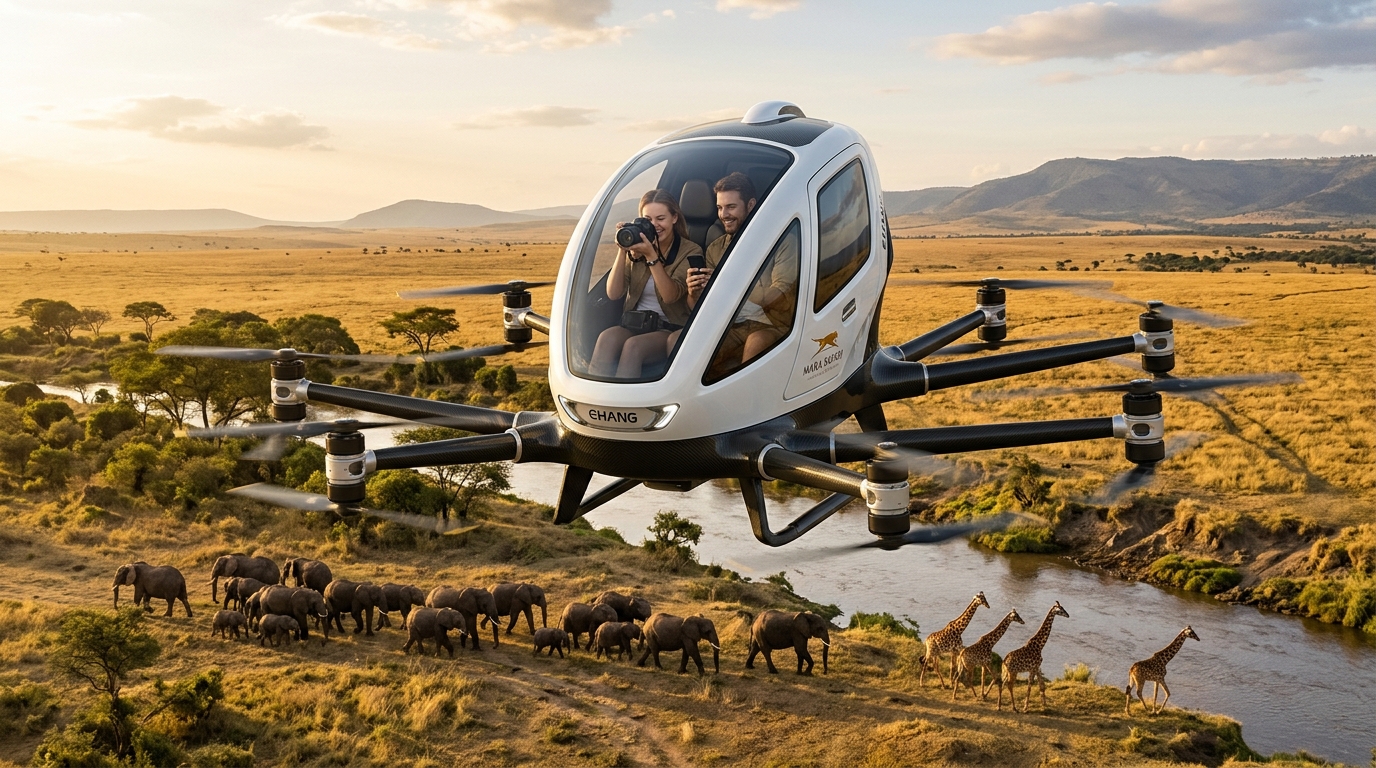
Across the vast plains of East Africa and the dramatic coastlines of the Western Cape, the future of sightseeing is moving to the skies. The day is not far off when tourists visiting Africa will trade dusty, six-hour overland bush transfers and deafening helicopters for whisper-quiet, glass-cabin flying taxis. By 2035, "drone tourism"—where travellers board autonomous or piloted multi-rotor passenger drones for breathtaking, top-down aerial sightseeing—is set to redefine how the world experiences Africa’s most iconic landmarks. From hovering silently above the Great Wildebeest Migration in Kenya’s Maasai Mara to gliding over South Africa’s Table Mountain, Victoria Falls, and the Okavango Delta, passenger-carrying electric vertical take-off and landing (eVTOL) aircraft are poised to unlock a new golden era for African hospitality.
For decades, aerial sightseeing in Africa has been limited to hot-air balloons at the mercy of the wind, noisy helicopters that scatter wildlife, or fixed-wing bush planes that require long gravel airstrips. Passenger drones change the equation entirely. Designed with wrap-around, floor-to-ceiling transparent canopies and quiet electric propulsion, these two- to six-seater flying taxis can lift off vertically from compact lodge pads, cruise at low altitudes, and offer uninterrupted 360-degree top-down views of landscapes and wildlife below.
Tourists in Kenya and South Africa Weigh In on Flying-Taxi Sightseeing
Across Africa’s premier tourism hubs in Kenya and South Africa, international visitors say the prospect of experiencing the continent’s natural wonders from the sky inside a passenger drone is something they would book in a heartbeat.
In Kenya, where millions of travellers visit the Maasai Mara, Amboseli, and the Great Rift Valley, tourists point to the unmatched perspective of seeing vast herds from directly overhead without the noise of a helicopter or the congestion of dozens of 4x4 safari vans.
"Imagine gliding silently in a glass-bottomed flying taxi right over the Mara River during the migration," said Liam O’Connor, a 41-year-old tourist from Dublin wrapping up a week-long safari in Kenya’s Maasai Mara. "On the ground, you sometimes end up parked behind fifteen other vans trying to see a lion pride through the bushes. Looking straight down from the sky in a quiet passenger drone—without roaring rotor blades scaring the animals—would be the most unforgettable wildlife view on Earth."
"For me, it’s also about skipping the exhausting road journeys," added Priya Nair, a 34-year-old traveller from Mumbai visiting Lake Naivasha and Amboseli in Kenya. "We spent five hours stuck in traffic and bumpy roads just getting between parks. If by 2035 I can hop into an electric flying taxi in Nairobi, look down at the Rift Valley escarpment and Mount Kilimanjaro from the sky, and land directly at my safari lodge in forty minutes, it will completely transform how families travel across East Africa."
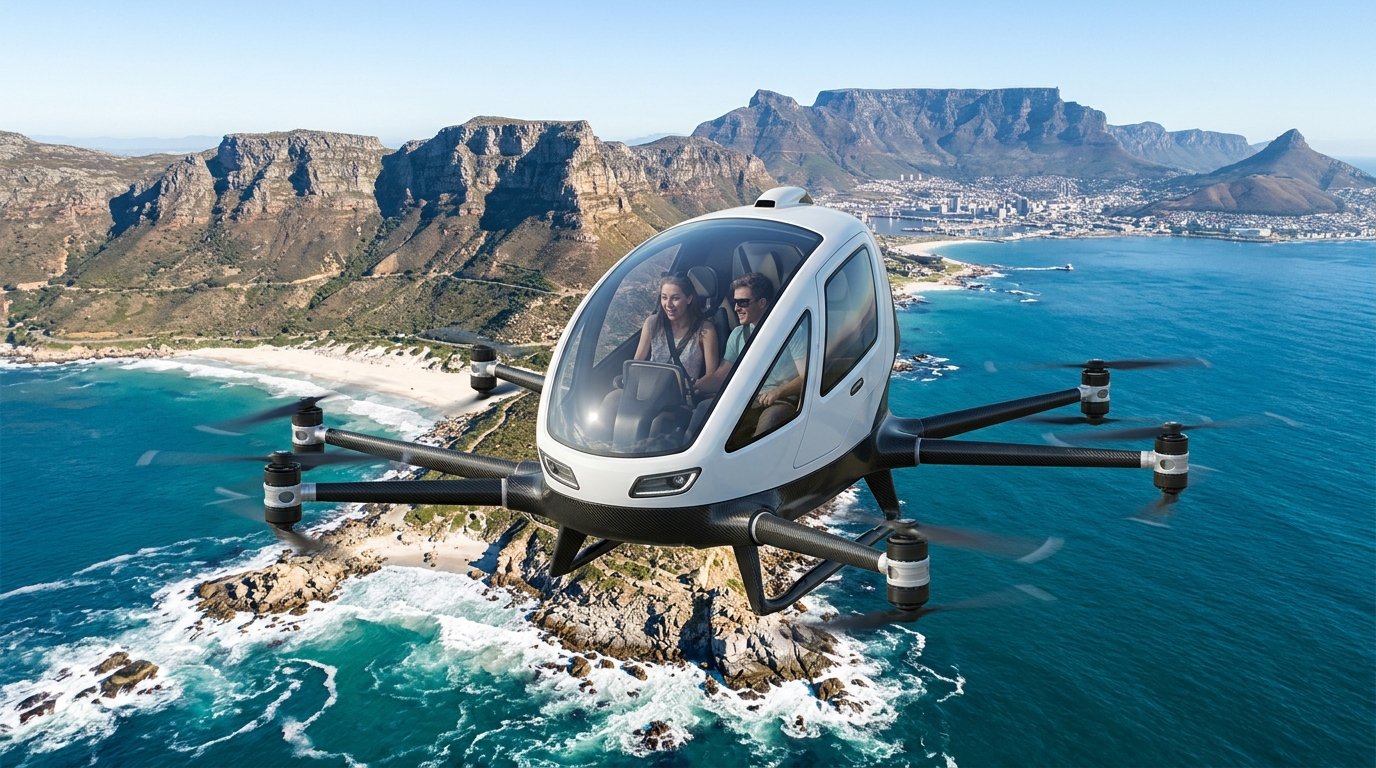
In South Africa, where dramatic coastal cliffs, vineyards, and Big Five reserves sit side by side, tourists in Cape Town and Kruger National Park are equally excited by the idea of top-down aerial excursions.
"A flying-taxi tour over Table Mountain, the Twelve Apostles, and the Cape Winelands would beat a helicopter ride every single time," said Markus Weber, a 49-year-old engineer and tourist from Munich visiting the V&A Waterfront in Cape Town. "Traditional helicopters are loud, vibrate heavily, and cost a fortune. Being able to board a smooth, electric passenger drone with a panoramic view looking straight down at the whales in Hermanus and Cape Point is the future of sightseeing."
"Seeing Kruger from the sky gives you a sense of scale you just can’t get from a dirt track," shared Hannah Brooks, a 29-year-old traveller from Toronto on safari near Hoedspruit, South Africa. "When you’re in a jeep, you only see twenty metres into the bush. In a low-flying passenger drone cruising quietly above the tree canopy, you could follow elephant herds moving toward watering holes from above while leaving zero tire tracks on the land."
What African Tourism Ministers and Aviation Officials Are Saying
African governments, tourism boards, and civil aviation regulators are already laying the groundwork for Advanced Air Mobility (AAM), viewing passenger drone corridors as both a congestion solver and a magnet for high-spending global travellers by 2035.
In Kenya, officials within the tourism and aviation sectors emphasize that regulated sky-tourism corridors will elevate the country’s status as a global eco-tourism pioneer while protecting fragile ground ecosystems from vehicle overcrowding.
"As global travel evolves toward 2035, Africa has a historic opportunity to leapfrog legacy transport infrastructure and embrace clean, electric aerial tourism. By developing designated low-altitude sky corridors and solar-powered landing pads across our flagship circuit—from Nairobi and the Rift Valley to the Maasai Mara and the coast—passenger flying taxis will allow visitors to experience Kenya’s breathtaking landscapes from above while dramatically reducing off-road vehicle pressure inside our reserves."
— Senior Tourism & Aviation Policy Official, Kenya
In South Africa, transport and tourism planners see urban and safari air-taxis as a natural extension of the country’s established aviation sector, linking international airports directly with iconic attractions such as Table Mountain, the Garden Route, Sun City, and Greater Kruger.
"Passenger drone tourism represents the next frontier for African hospitality. Our regulatory roadmap toward 2035 is focused on certifying safe, low-noise eVTOL air-taxi operations that give international tourists a world-class bird’s-eye view of South Africa’s coastline, mountains, and wildlife sanctuaries—turning what used to be a three-hour highway transfer into a twenty-minute panoramic flight experience," noted a Civil Aviation & Tourism Development Representative in South Africa.
Across the wider continent—from Zambia and Zimbabwe, where aerial views of Victoria Falls are already the centerpiece of visitor itineraries, to Egypt and Rwanda—tourism officials agree that early adoption of passenger air-taxis will position Africa at the forefront of luxury experiential travel.
New Horizons for Safari Resorts and Aviation Infrastructure
The shift toward sky-based drone tourism by 2035 is also set to reshape hospitality infrastructure across the continent:
- Solar-Powered Safari "Vertiports": Five-star game lodges, coastal resorts, and national park gateways are beginning to plan compact, off-grid solar landing and charging pads capable of turning around electric passenger drones in under 20 minutes.
- Fleet Upgrades for Tour Operators: Major African destination management companies (DMCs) and charter aviation firms are looking to transition from high-maintenance piston and turbine bush aircraft to lower-operating-cost eVTOL passenger fleets tailored for 30- to 90-mile sightseeing hops.
- Zero-Footprint Conservation Access: Because passenger drones require no runways and produce zero tailpipe emissions, remote ecosystems—from lush rainforest canopies in Central Africa to desert dunes in Namibia—can welcome visitors from the air without bulldozing roads through pristine habitats.
Conclusion: A New Vantage Point for African Travel
Just as the open-top 4x4 Land Cruiser and the hot-air balloon defined the first century of African safaris, the electric flying taxi is poised to define the next. By 2035, experiencing Africa from the sky will no longer be a rare luxury reserved for big-budget film crews—it will be an accessible, whisper-quiet, and sustainable centerpiece of the continent’s tourism offering. For destinations like Kenya and South Africa, embracing passenger drone tourism will not only give travellers an unforgettable top-down perspective of the world’s greatest natural wonders, but also ensure that those wonders remain unspoiled on the ground for generations to come.