
Email marketing in Africa has been yielding excellent results for entrepreneurs from across the world looking for buyers in the lucrative markets of Africa. By identifying potential buyers for their products in ket African markets and reaching them through targeted email campaigns has become a popular and effective way of marketing one products in the African markets. However, sourcing email database and African business directories is a task in itself. Email databases for Africa are difficult to source and are often priced high. Email Database of African Importers However, Africa Business Pages, one of the oldest African B2B portal, established in 1996 has been compiling databases or various African markets as well as business sectors on a regular basis by providing African companies a free registration service. This has helped the Africa Business Pages to acquire the most reliable and extensive database of companies in Africa. The email database for companies in Africa is now available for download from Africa Business Pages at cost-effective prices. The email database accuracy is guaranteed through six-monthly updates as well as telephone verifications – thereby making the database of African companies sold by the Africa Business Pages one of the most reliable in the world. Email marketing has a long history as one of the most powerful methods for growing sales and maintaining strong relationships with customers. It has also been found to be an effective way for brands to convert their website visitors or followers into potential customers. As a result, acquiring a reliable database of your target audience in the African markets can go a long way in developing new business relations with your business counterparts in Africa. The email database of African importers sold by Africa Business Pages provide an extensive listing of companies together with their business activities – making it easier for you chose your target audience, thereby making your email marketing campaign yield better results. Available for instant download in Excel format, the database of companies in Africa is a perfect starting point for those looking for buyers in Africa, importers in Africa. Database of companies in Africa As e-mail marketing usage in Africa grows, so does its benefits. Marketers now use e-mail as part of their business-to-business and business-to-consumer integrated marketing mix, as most recipients accept and even welcome targeted, useful e-mails. According to a recent Jupiter Research survey, 60% of business decision makers prefer e-mail and the Internet over other mediums for receiving marketing messages. Even the cost-per qualified lead can be 5% to 15% less when using online media. Whether you are looking for an email database or a complete listing of importers in Africa, you can find them all under one roof. Africa Business Pages, is an award-winning B2B portal dedicated to promoting trade to and from Africa and has been connecting African buyers with international suppliers since 1996. You can download the email database of companies in Africa from: http://importers.africa-business.com

The pharmaceuticals industry in Africa is one of the fastest growing sectors of business in Africa. The value of Africa’s pharmaceutical industry is expected to be worth $40 billion to $65 billion by 2020 from just $14.5 billion a decade earlier. This makes Africa a prime market for multinationals and pharmaceutical companies seeking new growth markets as traditional markets stagnate. The rapid growth of the pharmaceutical industry in Africa also augurs well for African patients, who have gained access to medicines previously unavailable in the African markets. By 2020, prescription drugs are forecast to grow at a compound annual growth rate of 6 percent, generics at 9 percent, over-the-counter medicines at 6 percent, and medical devices at 11 percent. Some of the main factors driving the booming pharmaceutical industry in Africa are: The Market for Pharmaceuticals in Africa Africa’s population is growing at a fast pace and changing the dynamics of the pharmaceuticals industry in Africa. It is estimated that by 2025, two-fifths of Africa’s economic growth will come from 30 African cities of two million people or more; 22 of these African cities will have GDP in excess of $20 billion. Cities in Africa have better logistics infrastructure and healthcare facilities, and urban households have more purchasing power and are quicker to adopt modern medicines – thereby making the pharmaceuticals industry in Africa an attractive business sector in the coming years. Pharmaceuticals Industry in Africa In the last decade alone, African countries have added 70,000 new hospital beds, 16,000 doctors, and 60,000 nurses. Africa’s healthcare sector is becoming increasingly effective through initiatives such as Mozambique’s switch to specialist nurse anesthetists and South Africa’s use of nurses to initiate antiretroviral drug therapy. The introduction of innovative delivery models is further increasing capacity and providing growth to the pharmaceuticals industry in Africa. Pharmaceutical Companies in Africa In order to regulate the rapid growth of the pharmaceuticals industry in Africa, African governments have introduced price controls and import restrictions to encourage domestic drug manufacture; making country-specific labeling mandatory to reduce counterfeiting and parallel imports; and tightening laws on import, wholesale, and retail margins. In the pharma industry, meanwhile, pharmacy chains in Africa are consolidating, horizontal and vertical integration is on the rise, and manufacturing is expanding. A flurry of mergers and acquisitions, joint ventures, strategic alliances, partnerships, and private-equity deals are further extending Africa’s pharmaceuticals market. Database of Importers of Pharmaceuticals in Africa The Africa Business Pages has compiled a database of importers of pharmaceuticals for those wanting to export pharmaceuticals to Africa. The database contains list of pharmaceuticals companies in Africa, importers of pharmaceuticals in Africa, companies in Africa engaged in hospital supplies, list of pharmacies in Africa, importers of hospital furniture in Africa as well as wholesalers of pharmaceuticals in Africa. Pharmaceutical companies wanting to export to Africa will find this database useful in identifying potential business partners in the African markets and contacting them with their business proposal. Many pharmaceutical companies use this resource for email marketing by using the Africa Pharmaceuticals Directory as an email database to reach importers in Africa of various pharmaceuticals. This database cum importers directory contains corporate information about importers of pharmaceuticals in Africa and also lists pharmacies in Africa, pharmaceutical companies marketing products in the African markets. Information includes company name, addresses, telephone numbers, fax numbers, mobile numbers, emails, links to corporate websites and business classification where applicable. You can also sort the data under different countries in order to target importers of pharmaceuticals in Africa, hospital suppliers in Africa.
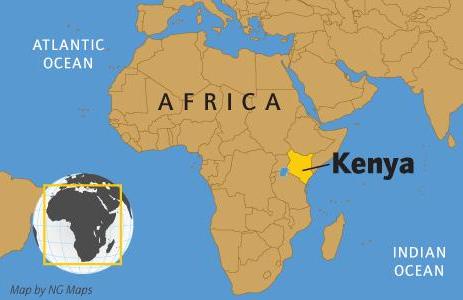
The pharmaceutical industry in Kenya is growing at a rapid pace and offers excellent opportunities for exporters and manufacturers to establish their products and services in the lucrative market for pharmaceuticals in East Africa. Kenya is currently the largest producer of pharmaceutical products in the Common Market for Eastern and Southern Africa (COMESA) region, supplying about 50% of the regions’ market. Kenya’s prescription pharmaceuticals market is worth over $500 million and is expected to grow at a compound annual growth rate (CAGR) of 11.8% till 2020. Prescription drugs account for around 78% of the market. However, the fastest growth in the coming years is expected in the over-the-counter (OTC) product sales. The pharmaceutical industry in Kenya consists of three segments namely the manufacturers, distributors and retailers. All these play a major role in supporting the country’s health sector, which is estimated to have about 5,000 health facilities countrywide. The number of companies engaged in manufacturing and distributionof pharmaceutical products in Kenya continue to expand, driven by the Government’s efforts to promote local and foreign investment in the sector. There are about 700 registered wholesale and 1,300 retail dealers in Kenya, manned by registered pharmacists and pharmaceutical technologists. These pharmacies are accorded a 25% mark-up on retail drugs. The pharmaceutical sector in Kenya is also engaged in assembling capsules, disposable syringes, paracetamol, and surgical gauze amongst others. Kenya spends about 8% of its GDP on health. The Kenya Medical Suppliers Agency (KEMSA), a division of the Ministry of Health, largely carries out the distribution of pharmaceutical products in Kenya. It distributes drugs to government public health facilities and private health facilities. The health sector in Kenya is one of the sectors that has experienced remarkable development in the recent years. The country has made great efforts in controlling diseases like Malaria, TB and Cholera while actively fighting the AIDS/HIV pandemic. Similar efforts have been made in controlling communicable diseases like poliomyelitis, neonatal tetanus and measles. The targets for eradication of the guinea worm disease and elimination of lymphatic filariasis and leprosy have been attained. Other parasitic diseases of epidemiological concern such as schistosomiasis, helminthiasis and leishmaniasis are seriously being addressed. The market is heavily dependent on the private clientele, and affordability remains a primary restraint, together with low reimbursement rates. Kenya also enjoys preferential access to the regional market under a number of special access and duty reduction programmes related to the East African Community (EAC) and the Common Market for Eastern and Southern Africa (COMESA) among others. Increasingly, urban consumers constitute Kenya’s primary market segment, while private hospital pharmacies remain the principal vendors within the market’s urban sector. Pharmaceutical Manufacturing Companies in Kenya: Alpha Medical Manufacturers – Nairobi Aventis Pasteur SA East Africa – Nairobi Bayer East Africa Limited – Nairobi Beta Healthcare (Shelys Pharmaceuticals) – Nairobi Cosmos Limited – Nairobi Dawa Pharmaceuticals Limited – Nairobi Didy Pharmaceutical – Nairobi Diversey Lever – Nairobi Eli-Lilly (Suisse) SA – Nairobi Elys Chemical Industries Ltd – Nairobi Glaxo SmithKline – Nairobi High Chem East Africa Ltd – Nairobi Ivee Aqua EPZ Limited – Athi River Mac’s Pharmaceutical Ltd – Nairobi Manhar Brothers (Kenya) Ltd – Nairobi Novartis Rhone Poulenic Ltd – Nairobi Novelty Manufacturers Ltd – Nairobi Pfizer Corp (Agency) – Nairobi Pharmaceutical Manufacturing Co (K) Ltd – Nairobi Pharmaceutical Products Limited – Nairobi Phillips Pharmaceuticals Limited – Nairobi Regal Pharmaceutical Ltd – Nairobi Universal Pharmaceutical Limited – Nairobi Cardiovascular, diabetes and anti-infectives constitute the largest and fastest-growing prescription market segments, and GlaxoSmithKline (GSK) is reported to be Kenya’s leading pharmaceutical supplier, with around 12% market share. This is primarily due to the fact that the company reduced the prices of key products by approximately 40% a few years back. Around 41% of all anti-infective products sold in pharmacies were licensed to GlaxoSmithKline. GlaxoSmithKline has been able to garner a substantial share of Kenya’s pharmaceutical market largely due to the popularity of its anti-infectives, which account for approximately 42% of all revenues generated in the prescription sector. The prices of Amoxil (amoxicillin) 500mg, Suprapen (amoxicillin plus flucloxacillin) 500mg and Floxapen (flucloxacillin) 500mg are particularly competitive within the respective active ingredient classes Cardiovascular is Kenya’s most dominant and fastest-growing prescription market segment, worth around $40 million in 2017 and expected to show a CAGR of 15.4% to 2019, while the diabetes market was valued at approximately $35.2 million last year and is forecast to rise at a CAGR of 13.5% during 2010-2019. Based on revenue segmentation, the top-selling cardiovascular product in Kenya was Nebilit [nebivolol) 5mg, licensed to Menarini, accounting for approximately 7% of revenues for all prescription products sold. And within the diabetes therapeutic segment, Merck Serono’s Glucophage (metformin) 500mg was the most popular product, based on volume segmentation, accounting for approximately 19.8% of all oral hypoglycaemic tablets sold. Kenyan private consumers’ prefer branded innovator products, despite the high penetration of generic manufacturers within the overall industry. A critical success factor within the Kenyan market is the use of distributors with established networks with key vendor outlets. Investment Opportunities in Kenya’s Pharmaceuticals Industry Opportunities for investment in the health/pharmaceutical sector in Kenya include: ? Manufacture of disposable surgical gloves, latex gloves and condoms. Commercial processing of traditional medicines, considering the diverse flora available in the country. ? Multipurpose chemical plant for bulk production of intermediate inputs such as paracetamol, aspirin, etc. ? Processing of locally available sugar, salt (sodium chloride) and ethanol to pharmaceutical grade for pharmaceutical industry use. ? Chemical plant to manufacture anti tuberculosis, anti-leprosy, antibiotic rifampicin from the penultimate state. ? Manufacture of Quinine by extraction from Cinchona bark and subsequent purification and synthesis to Quinine sulphate. ? Extraction of Hecogenin from sisal waste and synthesis of Betamethasone from Hecogenin. Manufacture of medical supplies e.g. syringes, catheters, gauzes, etc,and medical equipment for the regional market. Prospects for the pharmaceutical industry in Kenya? Export of high quality products ?Increased quantity of production Expand product portfolio and intensify the search for new markets and marketing opportunities Support for medical research Kenya’s Pharmaceutical Industry 15 Ensure strict adherence to the national code of conduct and the industry’s code of practice. Importers Database: Importers of Pharmaceuticals in Africa The research team at Africa Business Pages has compiled a valuable database of pharmaceutical companies in Africa through painstaking work across more than 20 African countries. The result is the compilation of the first even Africa Pharmaceutical Directory which lists more than 6,500 pharmaceutical companies in Africa. This database of pharmaceutical-related companies in Africa lists wholesalers of pharmaceuticals in Africa, pharmacies in Africa, pharmaceutical retailers in Africa, hospital suppliers in Africa, Pharmaceuticals Distributors, Clinics & Hospitals, Government Medical Clinics, Medical Institutes as well Manufacturers of Pharmaceuticals in Africa. The Africa Pharmaceutical Directory is available for download here. Companies and exporters of pharmaceuticals from across the world have been using this database of pharmaceutical companies in Africa to reach potential buyers in Africa of pharmaceuticals and connect with importers of pharmaceuticals in Africa. This Directory contains the latest and complete information about your potential business partners in several cities across Africa. Listings of Top Companies Dealing in Pharmaceuticals In MS Excel format Classified under different Trade Categories Up-to-date database of tyre dealers in Africa The database is well organised in an Excel sheet and the sortable fields include: Company Name, Address, Phone, Fax, Email, Website, Business Category.

Nigeria is one of the most promising and rapidly growing pharmaceutical markets in West Africa with more than 150 pharma formulation manufacturing facilities. The Nigerian pharma industry is growing at 13 % annually. The estimated market size is $1.8billion. In the ECOWAS (Economic Community of West African States) West Africa sub-region approximately 60% of drug manufacturing takes place in Nigeria, underlining the huge sub regional market. As Africa’s largest economy, most highly populated country, and biggest consumer market, Nigeria has been hailed as the next frontier for pharma after South Africa and the hotspots of Northern Africa. As more people join the ranks of the middle classes, household consumption is expected to grow by $94 billion over the next ten years. As out-of-pocket spending accounts for the bulk of healthcare expenditure, growth in consumption should translate into higher healthcare spending. The Federal Government of Nigeria are incentivising Nigerian drug manufacturers with tax holidays to support extra investment for quality upgrades and new factories. Nigeria’s pharmaceutical manufacturing sector has remained focused on the growth and expansion of drug manufacturing within the country. The sector has invested $300 billion in machinery and quality upgrades as a way to end drug importation. The Economic Community of West African States (ECOWAS), such as Ghana, Ivory Coast and Cameroon has 300 million consumers, with combined GDP of $734.8bn and annual growth rate of 6.3%. Nigeria and Ghana provide strong business opportunities for big pharmaceutical and generic pharmaceutical companies because the tropical climate in which Nigeria and Ghana are situated makes the areas a hotbed for infectious diseases, particularly malaria, tuberculosis and AIDS among numerous others. With a combined revenue base estimated to reach $3.12 billion in 2018 from $1.63 billion in 2003 at a compound growth rate of 13.39 per cent, the pharmaceutical industry in Nigeria and Ghana is very promising for investors. Counterfeits and Parallel Imports Plague Nigeria’s Pharma Industry In Nigeria’s predominantly informal distribution and retail networks, counterfeit and parallel medicines are often difficult to distinguish from the genuine article. Estimates suggest that informal retail accounts for more than three-quarters of the value of the pharma market, and parallel imports for up to half of drugs sold in some TAs. Several generics companies that have no commercial activities registered in Nigeria still have statin variants that are widely distributed and sold there, for instance. With a population of 180 million currently, the largest in Africa and abundance of human and natural resources, investment in the Nigerian pharmaceutical industry has a high potential of succeeding faster than any other country in the region. Besides, the estimated population increase to 200 million by 2020 according to recent forecasts means that the disease burden of the country will increase and consequently escalate demand for pharmaceutical products. Africa Pharmaceutical Directory: Reach Importers of Pharmaceutical in Africa The research team at Africa Business Pages has compiled a valuable database of pharmaceutical companies in Africa through painstaking work across more than 20 African countries. The result is the compilation of the first even Africa Pharmaceutical Directory which lists more than 6,500 pharmaceutical companies in Africa. This database of pharmaceutical-related companies in Africa lists wholesalers of pharmaceuticals in Africa, pharmacies in Africa, pharmaceutical retailers in Africa, hospital suppliers in Africa, Pharmaceuticals Distributors, Clinics & Hospitals, Government Medical Clinics, Medical Institutes as well Manufacturers of Pharmaceuticals in Africa. The Africa Pharmaceutical Directory is available for download here. Companies and exporters of pharmaceuticals from across the world have been using this database of pharmaceutical companies in Africa to reach potential buyers in Africa of pharmaceuticals and connect with importers of pharmaceuticals in Africa. This Directory contains the latest and complete information about your potential business partners in several cities across Africa. Listings of Top Companies Dealing in Pharmaceuticals In MS Excel format Classified under different Trade Categories Up-to-date database of tyre dealers in Africa The database is well organised in an Excel sheet and the sortable fields include: Company Name, Address, Phone, Fax, Email, Website, Business Category.
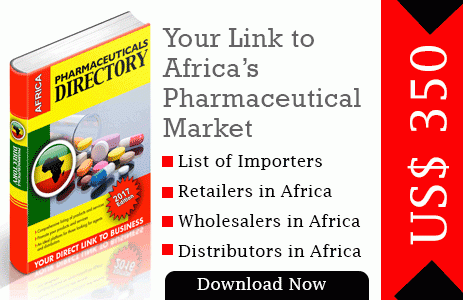
The research team at Africa Business Pages has compiled a valuable database of pharmaceutical companies in Africa through painstaking work across more than 20 African countries. The result is the compilation of the first ever Africa Pharmaceutical Directory which lists more than 6,500 pharmaceutical companies in Africa. This database of pharmaceutical-related companies in Africa lists wholesalers of pharmaceuticals in Africa, pharmacies in Africa, pharmaceutical retailers in Africa, hospital suppliers in Africa, Pharmaceuticals Distributors, Clinics & Hospitals, Government Medical Clinics, Medical Institutes as well Manufacturers of Pharmaceuticals in Africa. The Africa Pharmaceutical Directory is available for download here. Companies and exporters of pharmaceuticals from across the world have been using this database of pharmaceutical companies in Africa to reach potential buyers in Africa of pharmaceuticals and connect with importers of pharmaceuticals in Africa. This Directory contains the latest and complete information about your potential business partners in several cities across Africa. Listings of Top Companies Dealing in Pharmaceuticals In MS Excel format Classified under different Trade Categories Up-to-date database of tyre dealers in Africa The database is well organised in an Excel sheet and the sortable fields include: Company Name, Address, Phone, Fax, Email, Website, Business Category.
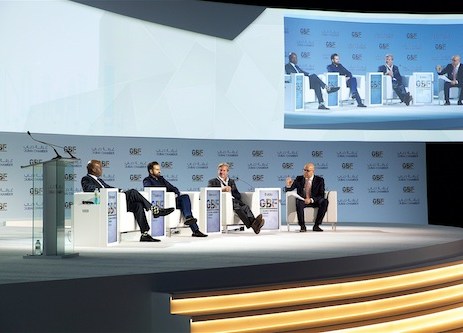
Dubai, UAE – Digital infrastructure and agriculture in Africa are key growth areas that are expected to attract a higher level of investment, a panel of financial experts said during the fourth Global Business Forum on Africa in Dubai. Addressing a panel discussion entitled, “Funding African Business – Deal Makers or Risk Takers”, Eghosa Omoigui, Managing General Partner of EchoVC Partners, Nigeria; Ashish J. Thakkar, Founder of Mara Group and Mara Foundation; and Rob Hersov, Founder and Chairman of Invest Africa, who presented unique and valuable insights on investment trends in Africa. Highlighting primary agriculture as a critical area for growth, Hersov noted that while everyone says Africa needs investments in power and infrastructure, the “most important thing is digital infrastructure because everything will be driven by a smartphone, and that is where we must be investing.” Hersov said that while London and Paris continue to be the key sources of capital for Africa, Dubai has a strong opportunity, as the emirate has the connectivity and innovative business environment that can serve as a platform for attracting investment into Africa. Thakkar said that while technology is going to change the continent dramatically, the digital opportunity is not being takenseriously enough, and called for a change to the “bandwagon approach.” “Digital infrastructure is the tip of the iceberg; it is the beginning (of the big change). We will have 700 million smartphones, which will change the way we live. From healthcare to education to agriculture to trade to truly enabling ecommerce, the impact of digitalisation will be game changing,” said Thakkar. To audience applause, Thakkar said that the key to attracting capital to Africa is for entrepreneurs to know that they are only answerable to themselves. “If we try to please others to come to our continent, it won’t work. If we are authentic and have a long-term ethical mindset, everyone will come, and those who later will kick themselves for not coming earlier,” he said. Omoigui said that the UAE and Dubai have shown their ability to innovate, and said that a lot more investment could be attracted by African countries if governments put more focus on cities and microeconomics as opposed to countries and macroeconomics. “While small and medium enterprises are the engine of growth, there is a complete mismatch when it comes to private equity support. A lot of these companies are not willing or capable of absorbing huge capital infusion, so it is important that we grow the companies – scaling up not just the business but also people,” said Omoigui. The fourth Global Business Forum on Africa, orgainsed by the Dubai Chamber of Commerce and Industry, was held on November 1 and 2, 2017, at Dubai’s Madinat Jumeirah. The high-level event was held under the patronage of H.H. Sheikh Mohammed bin Rashid Al Maktoum, Vice President and Prime Minister of the UAE and Ruler of Dubai.
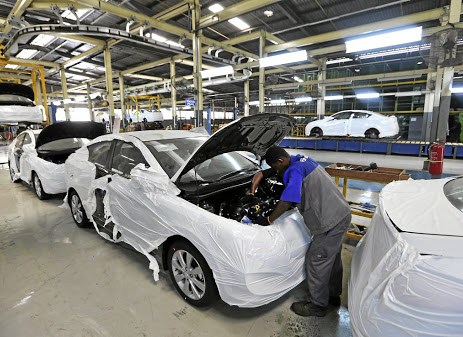
The automotive manufacturing industry in Africa is growing fast. Automotive production in Africa is growing industry as more and more manufacturers move closer to their African customers and discover the advantages of low-labour costs and tax holidays. Demand for automobile spare parts in Africa is also growing. The automotive production industry in South Africa is nearly 100 years old. In the 1980s and 1990s, Nigeria achieved significant production and production occurs in Egypt and more recently Morocco. Smaller production activities take place in Kenya and some decades ago in Zimbabwe. However, currently significant modern assembly is largely located in South Africa. Formed in 2015, the Africa Association of Automotive Manufacturers (AAAM) works specifically to promote and facilitate the growth of the African automotive industry. Formed by executives from the world’s biggest car manufacturers, the African Association of Automotive Manufacturers (AAAM) embarked on a concerted push to revive and resurrect Africa’s auto industry. Since then, the newly-created African Association of Automotive Manufacturers (AAAM) has been working with key African governments to create the right policy environment for the sector to Flourish. Africa’s untapped demand combines with a steady increase in consumer spending which has been rising at an annual rate of 10 per cent over the last few years. Moreover, analysts predict that by 2030, over half a billion Africans will have joined the middle class. “If the growth in vehicle sales keeps pace with growing consumer spending, annual sales of passenger cars in Sub-Saharan Africa will surpass 10 million units by 2030,” says South African consultancy B&M Analysts. Not surprisingly, one of the organisation’s first ports of call was government leaders in Nigeria’s capital Abuja. Fast-growing Nigeria is the jewel in Africa’s auto crown with just 44 vehicles per 1,000inhabitants,far below the global average of 180 vehicles per 1,000 inhabitants, according to recent estimates by a Deloitte report. While new vehicle sales have jumped in developing markets like China, India and Brazil over the last decade, growth in Africa has remained relatively slow. According to the International Organisation of Motor Vehicle Manufacturers (OICA), only 1.5 million new vehicles were sold across the African continent’s 54 countries with a combined population of 1 billion in 2016. South African consumers buy most new cars, and together with Egypt, Algeria and Morocco account for almost 80 per cent of the continent’s total auto sales, with only muted demand from important economies like Nigeria and Kenya. But far from being a disincentive to investors, the figures act as a rallying call. “When Volkswagen and General Motors moved into China the motorisation rate was lower than in Ethiopia today. The limited market was not a deterrent for the early movers who recognised China’s long-term potential,” says Karthi Pillay, Africa automotive leader, risk advisory at Deloitte. Mix with this a renewed determination amongst African leaders to diversify their economies through boosting manufacturing. New policies aimed at increasing domestic car production are starting to pay off. In 2016, China’s state-owned car manufacturer Beijing Automotive International Corp unveiled plans to build a R11bn (US$759mn) auto plant in South Africa – the biggest investment in a vehicle-production facility in the country in four decades will earmark over half of its output for export, initially to East, West and North Africa. Elsewhere, after a four-decade break in production, Volkswagen is starting up its Kenyan production line once again. The signs are good. But with challenges ranging from imported used cars flooding the market to Africa’s weak manufacturing base and a lack of finance for would-be car owners, Africa promises a challenging operating environment. IMPORT OF USED CARS IN AFRICA The biggest barrier to new vehicle sales in Africa is cheap, imported second-hand cars from the US, Europe and Japan. Consultancy Deloitte estimates that eight out of 10 imported cars in Ethiopia, Kenya and Nigeria are used cars. According to the Kenya National Bureau of Statistics (KNBS) the volume of imported vehicles between 2005 and 2017 grew at over 300 per cent from 33,000 to over 120,000 units. Governments are developing policies to limit the influx. In an effort to hike the price of second-hand cars to favour more new car purchases, Kenya has forbidden vehicles over eight years old from entering into the country, with plans to reduce this further. Similarly, Nigeria has increased its import duty on second-hand vehicles, most of which arrive in a bustling trade from the US into Africa via Benin’s Cotonou port. As a result, Nigeria’s imports of cars from the US plummeted from more than 100,000 a year to less than 40,000 units in 2015. Nigeria car salesOther signs of change include the enduring stagnation of the Japanese economy. It has resulted in sluggish sales of new cars there, which in turn has created a shortage in the supply of quality used vehicles. There has been “a deterioration of the environment surrounding the export of the used motor vehicles industry”, says Hiroshi Sato, chairman of the Japan Used Motor Vehicle Exporters Association. As crucial as controlling used-car imports is to nurturing a domestic industry, so is establishing a manufacturing base. South Africa leads the continent’s auto manufacturing sector with original equipment manufacturers, long-established in the country and backed by a vibrant community of 500 suppliers and diversi?ed manufacturers. Yet, head up the continent and there is little auto manufacturing until North Africa, bar light manufacturing from imported kits. Kenya only has three assembly plants, and they all produce vehicles with wholly imported parts that require no domestic manufacturing input. The Kenyan government, which has identified the auto sector as a key driver of the country’s industrialisation policy, has promised incentives to encourage a local industry. These include building special economic zones which benefit from tax holidays and low utility rates. It has also introduced local input requirements and tariffs on imported auto components that could be manufactured locally. Encouragingly, the assembly of motor vehicles in Kenya grew by 31.4% from 2013 to 2014, with assembly figures forecast to almost double between 2013 and 2019. It’s improving the country’s chances of becoming a hub for assembly and production in the region. It’s a similar story in Nigeria, where the Automotive Industry Development Plan (NAIDP) pledges to build auto industry infrastructure including supplier parks and clusters. Tax incentives include Nigeria allowing car groups to import two fully-built units at a discount duty of 35 per cent for cars and 20 per cent for commercial vehicles, for every one built locally. The government also aims to boost skills and investment and encourage a local component industry to supply manufacturers at competitive prices. It amounts to the kinds of incentives that encouraged Ford to begin assembling its Ford Ranger pickup in the Nigerian city of Ikeja in 2015, partnering with Ford dealer group Coscharis Motors on the project. “Nigeria is a priority market for us in Sub-Saharan Africa and this will allow us to better serve our customers, both from a retail point of view and in terms of vehicle and parts availability,” says Jeff Nemeth, president and CEO of Ford Motor Company of Sub-Saharan Africa. “We are committed to supporting Nigeria’s developing automotive industry and economy together with Coscharis, and are looking forward to being active in the community. New assembly operations, even on a smaller scale like this one, have very positive ripple effects in the local economy and workforce.” But nurturing indigenous manufacturing is still difficult. Nigeria-based groups Nissan and Peugeot also only assemble the bulk of their vehicles from imported semi-knocked down (SKD) kits because there is no local manufacturing industry. Even Nigeria’s own Innoson Vehicle Manufacturing Company (IVM) based in the south-eastern Anambra state, assembles trucks and buses with completely knocked-down (CKD) kits with all the vehicles’ engines, gear boxes and electrical parts imported from overseas. Auto-related imports into Nigeria accounted for around 11.5% of total imports, worth around US$6.9bn in 2014, according to UNCTAD. THE AUTOMOTIVE SECTOR IN AFRICA Nigerian policy is currently making things even more difficult. Like all manufacturing, the auto sector is struggling under currency policies and associated import controls set up to conserve hard currency – and encourage local manufacturing – by prioritising strategic imports. It’s starving the auto sector of inputs and leading to a collapse in supplies of product lines from glass to rubber. OICA estimates that total new vehicle sales in Nigeria dropped by more than half in 2017, compared to 2016. It’s this kind of foreign exchange controls that are also limiting the ability of companies to import SKD units and parts for assembly and repair in Ethiopia, where high taxes also make cars unaffordable for most. Exporting within Africa is also a challenge for the continent’s carmakers because of tariffs and barriers. Uganda and Tanzania slap tariffs on cars assembled in Kenya, the only country in the East African Community with assembly capability, because they don’t meet local input criteria. It gives imported second-hand cars the edge. In recent times, Toyota South Africa saw a fall in exports to the rest of the continent as a result of higher tariffs in Nigeria, Algeria and Angola. Meanwhile, South Africa exports more vehicles to Europe, the US and even Asia than it does to its neighbouring African market. “Vehicle exports to Europe and Asia continued to show growth. Vehicle exports to African markets recorded substantial declines. This was due to a combination of factors including ad hoc duty increases in Nigeria and Zimbabwe, regulatory restrictions in Algeria and weaker economic conditions across most African countries due to the decline in commodity prices,” says Nico Vermeulen, director of the National Association of Automobile Manufacturers of South Africa (NAAMSA). AFRICA: CAR FINANCE PROBLEMS Governments also need to create easier access to car finance. “The availability of financing for new motor vehicles is virtually non-existent in most African countries,” says Vermeulen. South African banks have been quickest off the mark. South Africa’s FirstRand Bank announced plans to set up a vehicle financing arm in Nigeria via its subsidiary WesBank, Sub-Saharan Africa’s largest provider of auto loans. Meanwhile, First Bank of Nigeria has spotted opportunity in the growth of car sharing in Nigeria in a development that the architects trying to build demand for new cars can hardly welcome. The bank’s vehicle ?nancing arm plans to extend borrowing to highly-rated Uber drivers via low-interest, used vehicle loans. The car-sharing platform has operated in Abuja and Lagos since it entered the Nigerian market in 2014. It currently has more than 2,000 drivers and was targeting 4,000 by the end of 2016. “We are absolutely committed to making it as easy as possible for our driver partners to start and maintain their own successful and pro?table businesses,” says Ebi Atawodi, general manager of Uber Nigeria. “And these used vehicle ?nance options make it possible for those with a demonstrable performance commitment to build sustainable businesses without incurring the high costs often associated with new vehicle purchases.” The growth in car sharing in Nigeria leads Deloitte’s Pillay to ponder future developments in the industry. “It shows mobility leapfrogging car ownership; Africa may not be a market focused on making and selling cars,” he suggests. Indian and Chinese manufacturers believe their low-cost models will have the advantage, while others are betting on the electric car. Uganda’s Kiira Motors grew out of a research project at Makerere University and is aiming to produce electric vehicles by 2019 before becoming original manufacturers by 2039. Ford is expanding its multi-modal approach to urban mobility. One of the innovations on show at Go Further Africa was its electric MoDe:Pro e-bike. Whatever the future holds, Africa’s consumers are the last untapped market for the auto giants.
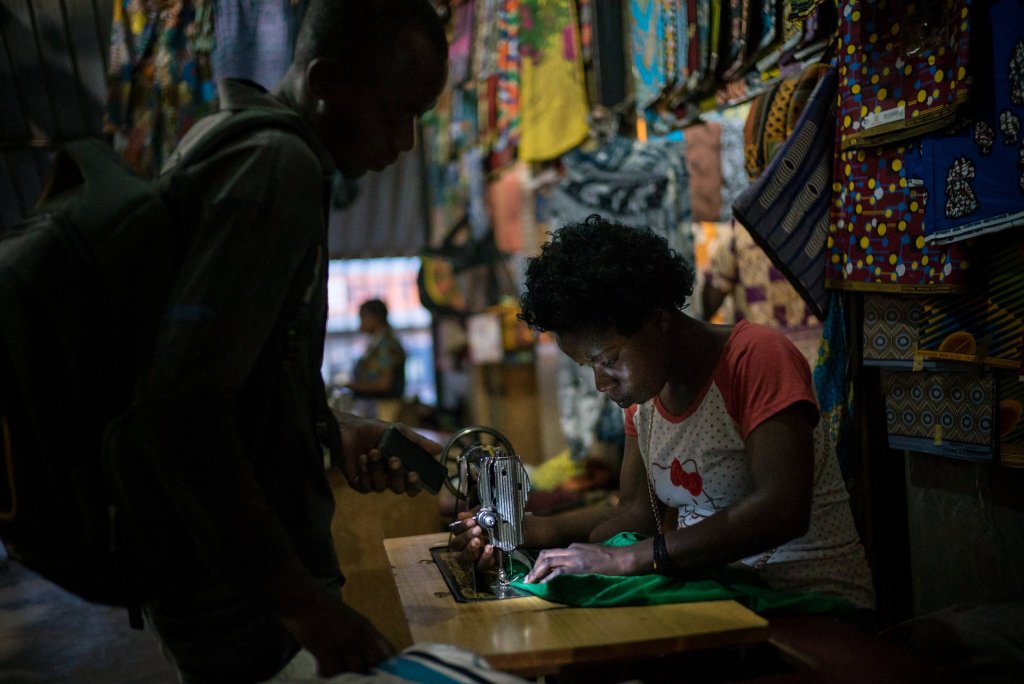
East African countries could ban imports of used clothes and second-hand cars in the next three years, putting an end to a lucrative trade in the region. The EAC directed member countries to buy their textiles and shoes from within the region with a view to phasing out imports by 2019. The move follows a decision by the six-nation East African Community – Kenya, Uganda, Rwanda, Burundi, Tanzania and South Sudan – to fully ban imported second-hand clothes, shoes and used cars by 2019, arguing it would help member countries boost domestic manufacturing. Second-hand cars have also been blamed for causing accidents. To avoid paying taxes, people pay bribes at ports to import cars. Those cars then do not go through any safety checks. To give some idea of the extent of smuggled imports, recent news reports claim that over 2,700 shipping containers had disappeared in at Dar es Salaam port in Tanzania. The U.S. Trade Representative is also threatening to review trade benefits to Rwanda, Tanzania and Uganda under the African Growth and Opportunity Act (AGOA) after a complaint by U.S. interests about East African ban on imports of used clothing. The AGOA trade program provides eligible sub-Saharan countries duty-free access to the United States on condition they meet certain statutory eligibility requirements, including eliminating barriers to U.S. trade and investment, among others. U.S. AGOA imports from Rwanda, Tanzania, and Uganda totaled $43 million in 2016, up from $33 million in 2015. U.S. exports to Rwanda, Tanzania, and Uganda were $281 million in 2016, up from $257 million the year before.
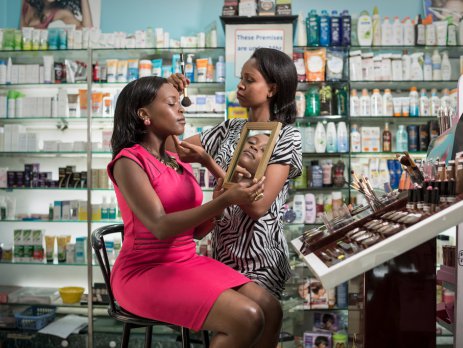
The cosmetics market and beauty products market in African is poised for unprecedented growth. African consumers have long been asking for products adapted to their hair, skin and body specificities. Africa remains a largely untapped market where consumers are screaming out for quality products adapted to their specific needs. For example, African skin requires darker shades than make-up lines traditionally offer. Make-up also needs to be more resistant to heat. Different needs also exist in terms of skin care, as anti-ageing products for African consumers primarily aims at tackling dark spots and uneven complexion, whereas anti-ageing products for Western women aims at tackling wrinkles first. And in terms of hair care, matters become more complicated since African hair strongly differ from Caucasian or Asian hair but also varies from one country to another. It is a well known fact that the biggest challenge for many African women is combing their hair – which itself can be painful at times. Knowing such differences, it is easily understandable that African consumers, and especially women, pay strong attention to Africa-specific products. Product tailoring is the key to winning the African battle…provided the products remain affordable. Therefore, Cost and R&D competitiveness are critical in the beauty sector in East Africa. The African Market Africa has 54 countries; including the addition of the South Sudan in 2011. In 2015, the urban population was estimated at 450 million inhabitants, or 40% of the total African population; making Africa more urbanised than India. It is estimated that by 2030, more Africans will be residing in urban areas for the first time in the continent’s history and this number is projected to grow to 1.2 billion; that amount to almost 60 per cent of the total population of Africa. Africa has 52 cities with more than one million inhabitants and is expected to grow to 75 cities in the near future. Experts believe that if the infrastructure expenditure grows in the coming years, the cosmetic market growth rate will also be improved due to the benefits that an improved infrastructure provides. The increase in growth rate can lead to further improvements in the infrastructure due to the immense amount of money generated from this sector of the economy. The African market is expected to be in virtual circle where an increase in infrastructure spending will lead to an increase in the market growth rate, which in turn, will benefit the cosmetic industry. However, customs procedures are still a lengthy process. A trade-facilitation programme that would cut the time needed to comply with customs procedures at port by 50 per cent would generate an extra $15 billion annually in GDP for sub-Saharan Africa alone. Market Segmentation & Brand Awareness While the growth of the cosmetics goods market is highly correlated with macroeconomic indicators such as real GDP growth and disposable income, a key impediment to cosmetics brands’ successful expansion into Africa is a failure to recognise the vast differences in consumer preferences between these high-growth countries. Africa does not constitute a single economy, and vast cultural and religious differentiation does not allow cosmetic firms to blindly use one African country’s product penetration strategy as a blueprint for expansion into the entire region. Correctly estimating the maturity phase of the target country is pivotal to commercial success, as different product categories see peak demand at different moments of the maturity cycle, ranging typically from the lowest to highest price points. For example, while the Kenyan cosmetics goods market is estimated to have expanded by 60 per cent during the period 2007-17, higher-end cosmetic brands such as Revlon met with weak appetite as the Kenyan consumer favoured cheaper brands. Gender differentiation is also a key factor to consider: male income continues to outpace their female counterparts’ earnings trajectory, which presents opportunities in the sector of men’s grooming products. Not surprisingly then, men’s grooming is fast emerging as one of the fastest growing sectors in East Africa’s beauty and personal care industry.
Preliminary request for participation in the trade show
place
calendar_today
Preliminary request for visitor registration
Visitor Registration
place
calendar_today