Export to Africa: How and What
folder_open Articles
Africa is the second largest continent and demand for consumer and capital goods is always high in the local markets. Most African economies rely on imports to satisfy the needs and requirements of their large population. If you want to export goods and products to Africa, good research and knowledge of the legal regulations are a must for your success. Africa hosts the majority of the top ten fastest growing countries in the world. The IMF estimates that economic growth in sub-Saharan Africa will cross 6.5% in 2025. The World Bank believes that most African countries will reach “middle income” (at least US$1,000 per person a year) by 2025 if current growth rates continue. Nearly 65% of the labour force in Africa is expected to have some secondary-level education by 2025. Africa has around 125 million people with household incomes exceeding $5,000 – meaning they can direct more than half of their income towards discretionary spending. It’s expected that this figure will cross 150 million by 2025. Exporting to Africa looks a much rosier prospect than in the past and already countries such as the US, Brazil, China and India have increased their business dealings with the African continent. Main Products Exported To Africa If you are looking to break into the African market, there are many norms that you should consider as an exporter. Here, we will discuss the top products to export to Africa: Pharmaceutical Products Pharmaceutical products such as different medical drugs and vitamins as well as health supplements are in big demand in Africa. Since the industry of health and pharmaceutics is in constant development, investing in such goods is one of the best decisions to make nowadays. Also, African people suffer from a variety of conditions, especially in the rural environments where medical drugs are not so accessible. Iron and Steel When it comes to raw materials, exports of iron and steel which are much needed on the African market is indeed a profitable business. Africa can’t produce such metals due to lack of funds, and the demand is high especially in the urban areas of the continent. Automobile Spare Parts Automobiles and its components such as spare parts, tyres, batteries, lubricants and different mechanical pieces needed for repairs are also very much in demand in Africa. Many countries have been exporting a wide range of automobile spare parts to Africa and making a neat profit. Cars Exporting cars comes with a lot of new regulations and some of them keep changing. You have to consider the value of the car, the demand present on the market as well as the financial capabilities of African people. Used cars are also in big demand in African countries. Textiles Clothing One of the main exports to Africa is textiles and different clothing. Clothes will always be a must and a basic necessity which is why they are a great opportunity for those wanting to export to Africa. However, your best bet as an exporter is to supply clothes and textiles in urban areas of Africa because they will not sell so good in rural villages or undeveloped regions. Rice Rice is being imported into African in increasingly large quantities in recent years. Countries like Nigeria are big consumers of rice, and there is never enough on the market. Imports keep coming to support the demand which is a great opportunity for foreign exporters. Even if Africa started producing their rice, the quality is still not the same as the imported rice. That is why many African people prefer to consume rice from other countries like India, China, Thailand, Pakistan and Malaysia. Local production of rice is also still very low due to lack of financial possibilities and no investments. Some rice producers decided to set up a rice farm in Africa to produce such goods locally. It helps them skip the entire import-export process which can be time-consuming and even unprofitable in some occasions. Plastic Raw Materials Plastic raw materials are also a great category of goods to import in Africa because they are highly functional and tend to come at a fairly low price as well. The demand for plastic increased along with the urbanization process that took place in the past decades in Africa. More people live in cities, and the need for plastic materials and objects became a real struggle. Especially in countries like Nigeria where more than half of the population lives in urban areas. Even if other countries try to stay away from plastic since 2015, Africa still relies on this material mainly because it is affordable for all types of processes. Opportunities for Export to Africa There are enormous opportunities in Africa but you have to thoroughly research the market. If your business produces machinery and equipment, chemicals, petroleum products, scientific instruments or foodstuffs then exporting to Africa is a great idea. It’s important to have an agent who can travel to your target market on a regular basis and has established a network of customers there. This allows you to concentrate on supply and production. At some point though it’s important for you to get on that plane and travel to Africa. It’s important to meet people face-to-face and build proper relationships but make sure that you learn about their culture to avoid any potential embarrassing mistakes. Some countries such a Nigeria offer both complimentary and fee-based market research tools to help possible exporters from other countries to analyze the market and gain insight into specific sectors. Other advantages with Africa are lower salaries and rents, improving infrastructures and growth in those who have broadband. There are risks though as in any emerging markets. These include crime and corruption. Also in a country such as South Africa you have to respect laws that demand a certain percentage of employees, directors and shareholders are black. In Gabon there are strict rules that have to be adhered to. These protect the health, safety and environment of Gabon’s citizens from sub standard imported goods. Exporters need to provide a Certificate of Conformity for Customs clearance. It’s important to break into a growing market as early as possible. Make sure you do your research, employ agents to keep a close eye on your investments and make sure you comply with all the relevant laws in the country you are exporting to and exporting to Africa really can pay dividends. Increased Trade with Africa Exports from Africa totaled US$476.6 billion in 2018. That dollar amount reflects an -11.3% drop since 2014 but a 12.8% year-over-year upturn from 2017 to 2018. In comparison, global exports from all countries worldwide equaled $19.228 trillion in 2018, rising 1.2% in value since 2014 and appreciating by 8.5% from 2017 to 2018. Africa’s exports represent an estimated 2.5% of total world exports in 2018. Based on statistics from the International Monetary Fund’s World Economic Outlook Database, the total Gross Domestic Product for Africa calculated on a Purchase Power Parity (PPP) basis amounted to roughly $6.813 trillion in 2018. Therefore, exports account for about 7% of Africa’s total economic output. Given Africa’s population of about 1.264 billion people, the total $476.6 billion in 2018 exported goods originating from continental Africa translates to roughly $375 per African resident. Africa Import Directories Africa Business Pages has played an instrumental role in promoting direct B2B contacts between African buyers and international suppliers. As one of the leading B2B portals of Africa, the Africa Business Pages has compiled the Africa Importers Directories that help international suppliers identify and contact their business counterparts in key African markets. Available for download in Excel format the Africa Importers Directories list major importers in Africa. The directories are available countrywise as well as sector wise. You can download the Africa Pharmaceutical Directory of you are dealing in pharmaceuticals. Or the Africa Automotive Directory if you are an exporter of automobile spare parts and accessories. The Africa Foodstuff Directory will be specially useful for those exporting foodstuff items. The Africa Importers Directories provide a useful database of companies in Africa and helps international suppliers find buyers in Africa by promoting direct B2B contacts between buyers and sellers.
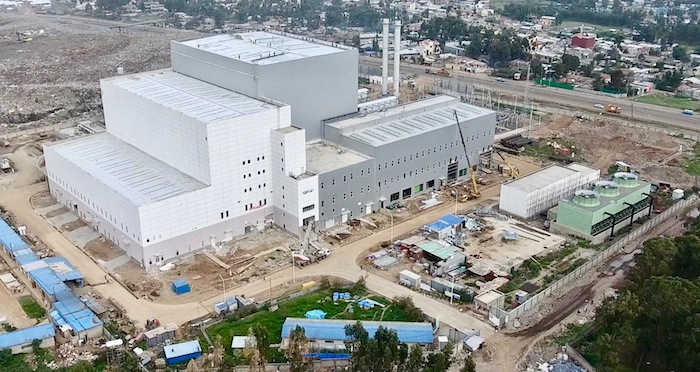
Ethiopia is planning to convert its garbage into energy through use of new technology. Koshe is the biggest garbage dump in Ethiopia and is located on the outskirts of the country's capital city, Addis Ababa. The Koshe garbage dump was in the news last year when 114 people died due to the pollutants emanating from the garbage dump – spread over an area approximately the size of 36 football fields. Ethiopia has since turned the site into a new waste-to-energy plant via the Reppie Waste-to-Energy Project which is the first of its kind in Africa. This forms part of efforts to revolutionise waste management practices in the country. The plant is designed to generate electric power from solid waste collected from the capital. Incinerating 1,400 tonnes of waste every day, the plant is capable of contributing 185GWh of electricity each year to the national grid. However, Reppie Waste-to-Energy Project fell flat due to disputes between Ethiopian Electric Power (EEP) and two contractors – Cambridge Industries and its partner, China National Electric Engineering Company – which finally led to the plant ceasing operations soon after its inauguration. Now, after hectic efforts to resolve the dispute, the Ethiopian Electric Power (EEP) is planning to restart operations of Reppie Waste-to-Energy power plant in three months and once again start generating electric power using the garbage at the Koshe rubbish dump. Waste-to-energy uses trash as a fuel for power generation. Similar to other power plants (just using trash rather than other fuels like coal, oil, or natural gas), the fuel is burned in an environmentally sustainable manner, in a combustion chamber to heat tubes of water in boiler walls. The water is heated until it turns into steam, which is then used to drive a turbine generator that produces electricity. "The hulking waste-to-energy power plant taking shape on the edge of Addis Ababa, Ethiopia’s capital, symbolises ambitions to convert the agrarian Horn of Africa country into an eco-friendly industrial powerhouse." wrote the Guardian newspaper. In about a year, green, cutting-edge Reppie will replace a vast rubbish dump picked over by hundreds of scavengers. Currently, toxic effluent from the landfill seeps into nearby rivers when it rains and methane perpetually drifts into the atmosphere. Constructing Africa's first major waste-to-energy facility fits perfectly with Ethiopia’s Climate Resilient Green Economy. The plant will eliminate over 80% of the Municipal Waste delivered to it, whilst at the same time maximizing energy recovery in order to deliver much-needed renewable power to the surrounding cities and towns.

South Africa is wooing investors from the UAE to its attractive tourism sector by highlighting various investment opportunities in South Africa's travel and tourism industry. To this end, the South African Department of Tourism held a tourism investment seminar in Dubai to attract investors from the UAE. The seminar was part of an ongoing programme by the South African government to strengthen the investment ties between the UAE and South Africa, especially in the field of tourism. South Africa welcomed around 11 million tourism visitors in 2018, making it one of the most popular destinations on the continent. The tourism sector contributed three per cent to South African gross domestic product in 2018 and employs nearly 700,000 people. Headed by Shamilla Chettiar, Deputy Director-General, Destination Development, South African Department of Tourism, the 12-member delegation consisted of representatives from the Department of Tourism, provincial tourism promotion agency and the North West Tourism Board, South Africa’s Industrial Development Corporation, IDC, and project promoter, Incopho Coastal Resorts. During the investment seminar, guests were provided presentations and overviews regarding the marketing of South Africa as a tourist destination, detailed information regarding the investment landscape, opportunities and government support, as well as hearing first-hand experiences from a UAE investor in South Africa’s tourism industry. Private meetings were then held between potential investors and members of the South African delegation. "We are targeting the United Arab Emirates because of the high concentration of high-net-worth-individuals (HNI) with investable assets, as well as the growing outbound market from the Gulf region to South Africa," said Kenneth Siphelelo Hlela, Director of Tourism Investment Coordination at the South African Department of Tourism. "We are aware that to grow the UAE outbound market to South Africa, we need to develop products that respond to that market. Therefore, our planned investment mobilisation efforts are in line with the South African Tourism's marketing efforts in that region. We want to assure both investors and the South African travel industry that South Africa is doing everything to keep up with the demand through mobilising investors who will ensure that demand is matched by our supply," he said. “We want to assure both investors and the South African travel industry that the South Africa is doing everything to keep up with the demand through mobilising investors who will ensure that demand is matched by our supply,” he concluded. The South Africa government’s tourist agency plans to boost visitor numbers by over 40 percent by 2021.
Airbnb is giving tough competition to Africa's overpriced hotels and has become a serious threat for the hotel industry in many African countries. Many hotel chains are putting pressure on African governments to regulate the world’s biggest accommodation-sharing site: Airbnb. Recently, South Africa’s hotel federation claimed that Airbnb was taking business away from registered hotels and eating into their profits and even went on to describ Airbnb as a “massive problem”. In countries like Kenya, Tanzania, and Namibia, governments have already brought in legislation to rope in the rising popularity of Airbnb. Kenya’s government is in talks with Airbnb to register all properties on the platform and start remitting taxes by July, 2019. In Tanzania, homeowners that our renting their properties through Airbnb have been ordered to register their facilities by September, 2019 or face arrest. The same thing happened in Namibia in 2017 – private home rentals with two or more bedrooms were ordered to register with the local tourism board. The restrictions from African governments reflects Airbnb’s rapid growth in Africa and the increased appetite from both local and international travelers to use the platform instead of overpriced hotels – especially in off-beat destinations that might not have established hotel outlets. These government moves also signal efforts by the local governments to retain the major share of tourism revenues, which form critical parts of the national gross budgets for many African countries. The fightback from the African hotel sector also comes as major hotel chains expand across the continent, looking to both bridge the scarcity of top-notch quality hotels and tap into the growing number of tourists and business travelers. Airbnb itself recently bought into the hotel sector by acquiring booking application HotelTonight, a crucial move as it gears for an initial public offering. The demands to rein in Airbnb is also symptomatic of the challenges facing global companies like Uber and Netflix in Africa, whose disruptive services have been accused of flouting local regulations, short-changing customers, and avoiding taxes. For instance, Africa’s dominant television service MultiChoice blames multinational streaming services for a loss of 100,000 subscribers, arguing also that Netflix and Amazon were able to rake in higher profits on lower subscription fees because they were not subject to local rules and taxation plans. South African Hotel Industry Protests The opposition in South Africa is especially worrying for Airbnb given how much success the company has had in the country. Five years of Airbnb listings brought $247 million to South Africa, with Cape Town as the most popular with over 17,000 listings. The accommodation association in the southeastern city of Port Elizabeth also complained of Airbnb’s growing influence, saying the platform made $430,000 in the city, a 65% increase from December 2017. Taking note of some of these complaints, South Africa amended its Tourism Bill to include “short-term rentals”– meaning once the bill becomes law, Airbnb listings will follow the same regulations as the rest of the hospitality industry, including being subject to the tourism board’s official grading system. Overpriced Hotel The tourists are happy though – finally there is an alternative to some of Africa's grossly overpriced hotels. By providing competition to hitherto unchallenged monopoly of the unfair rates demanded by many African hotels, Airbnb will contribute in the growth and development of the hotel industry across Africa. After all, competition breeds quality!

Boom Time for Africa's Aviation Industry
folder_open Articles , Business Outlook
Africa’s aviation industry is experiencing a boom time as the continent continues to increase airline frequency to the GCC and other destinations around the world. Undoubtedly, the potential for the aviation sector in Africa is immense as the African aviation industry continues to provide new opportunities for growth and expansion. The International Air Transport Association (IATA) projects that the African continent will become one of the fastest growing aviation regions within the next 20 years, with an average annual expansion rate of almost 5%. IATA predicts that Africa will become one of the fastest growing aviation regions in the world by 2040. Currently, there are 731 airports and 419 airlines on the African continent, with the aviation sector supporting around 7 million jobs and generating $80 billion in economic activity. In terms of passenger numbers, 47 million passengers departed from Africa’s top five airports, which included Cairo, Addis Ababa and Marrakesh in 2018, according to the latest ANKER report. “Emirates and Saudia were only responsible for 8 million of those passengers, highlighting the potential for new routes throughout the continent and between the Middle East and Africa. Furthermore, IATA reckons if just 12 key Africa countries opened their markets and increased connectivity, an extra 155,000 jobs and US$1.3 billion in annual GDP would be created in those countries. The international aviation industry has been monitoring developments in Africa closely, especially since the Single African Air Transport Market (SAATM) agreement was drawn up in January 2018. The aim of SAATM is to open up Africa’s skies, allowing airlines to fly between any two African cities without having to do so via their home hub airport, boosting intra-Africa trade and tourism as a result. To date, 28 countries out of 55 member states have signed up to SAATM representing over 80% of the existing aviation market in Africa. However, despite its rosy outlook, the sector still faces significant challenges, indeed, protectionist trends have resulted in a rather lacklustre response from many members, concerning competition rules, ownership and control, consumer rights, taxes and commercial viability. “These mechanics are integral to an open sky treaty and necessary to resolve existing differences between airlines and provide an equitable way forward. Sixteen countries in Africa are landlocked, so the pent-up demand for affordable air transport must be considerable,” said Karin Butot, CEO, The Airport Agency “These, as well as other salient issues, will no doubt be discussed at length between senior network planning teams and high-level executives representing the aviation and tourism industries, in Africa’s as well as the Middle East & Asia, through unlimited one-to-one pre-scheduled networking appointments,” added Butot.

E-commerce In Africa: Projections Vs Reality
folder_open Articles
Going by statistics alone it is obvious that Africa is an up and coming market for e-commerce. Though African countries are not ranked as high as other markets like the US and Europe when it comes to e-commerce, the online shopping phenomenon is spreading fast across the continent. E-commerce in Africa was valued at $16.5 billion in 2017 and this value could cross the $75 billion mark by 2025. Even though these predictions paint an optimistic picture, one must do a reality check before completely relying on these reports and predications. The reality is that E-commerce in Africa is far from realising its full potential in the short term future because of many inherent shortcomings that plague the African continent. Experts believe that a number of problems need to be resolved before Africa can realise its full potential as an e-commerce ready market. Online Payments First and foremost is the issue of online payments. As many African countries have few people with access to a bank account, most e-commerce platforms in Africa have turned to mobile payment as a payment method during the checkout process. To make maters worse, most Africans are accustomed to using cash. It’s more familiar and tangible than digital payments, which are fairly new on the scene for most African markets. Data Costs No doubt, with a billion people on the continent still mostly offline, Africa does present itself as a huge market for online trading. However, one of the major challenges facing African e-commerce is the high cost of Internet services. Less than one-third of the African population has an Internet service that allows them to shop online. Internet data is expensive for most people in Africa, and with those who manage to have connection to the Internet experience weak Internet connectivity, consequently making online shopping not an attractive option for everyone. This means that many Africans don’t find it economical to spend time even attempting to browse through e-commerce sites when they could easily obtain needed items from physical stores. However, with continued investment in fiber optic networks and pressure on governments to pursue lower Internet costs, this may become less of a barrier over the coming decade. Delivery Problems Delivery of goods is a real challenge for e-commerce operators in Africa. The postal services in most African countries are extremely limited or non-existent, making e-commerce operations extremely difficult. E-commerce businesses rely entirely on great infrastructure, including an effective postal service to for logistical purpose. However, e-commerce in Africa relies on motorbike delivery operations, which increase the cost of doing business. Conclusion In the coming years, we can expect increased implementation of innovative technologies, including drone deliveries, mobile payments, and fiber optic infrastructures. This, together with education about the safety and convenience of online payments, makes the future of African e-commerce extremely promising.
Nigeria: Economic Recovery Will Open New Business Opportunities
folder_open Business Outlook , West Africa
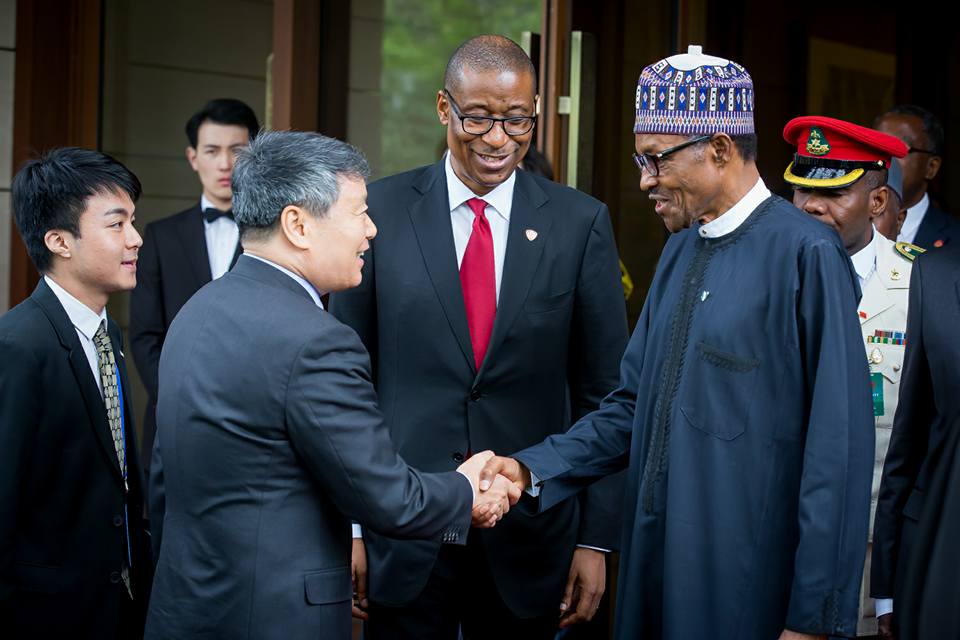
New economic measures adopted by the recently re-elected government of Muhammadu Buhari will try to expand Nigeria's economy away from oil income dependence and focus on consolidating Nigeria's manufacturing base – thereby opening new business opportunities for overseas suppliers and investors. Nigeria's population and gross domestic product is projected to reach 399 million people and cross $3.3 trillion by 2050. However, much needs to be done to bridge the gap between the reality of Africa’s largest economy and its undisputed potential. While Nigeria’s economy has performed much better in recent years than it did during previous boom-bust oil-price cycles, such as in the late 1970s or mid-1980s, oil prices continue to dominate the country’s growth pattern. Nigeria emerged from recession in 2017, with a growth rate of 0.8%, driven mainly by the oil sector. Growth was higher in 2018 (at 1.9%) and more broad-based; however, it still fell below the population growth rate, government projections and pre-recession levels. As Africa’s top oil producer, Nigeria is heavily reliant on crude, with the fuel accounting for 90 percent of foreign-currency earnings and two-thirds of government income. Without reforms to reduce its dependence on oil income, Nigeria risks “a lost decade” of flat economic growth. The country has recently held national elections in 2019, for the sixth consecutive time since its return to democracy in 1999. The incumbent president, Muhammadu Buhari won the elections and would be sworn in for a second term on May 29, 2019. Robust Economic Growth Nigeria’s economy grew in 2018 at its fastest pace since a recession two years earlier. Nigeria’s central bank expects the economy to pick up in 2019, forecasting a gross domestic product growth of 3 percent, up from 1.9 percent recorded last year. On the other hand, Nigeria continues to face massive developmental challenges, which include the need to reduce the dependency on oil and diversify the economy, address insufficient infrastructure, and build strong and effective institutions, as well as governance issues and public financial management systems. Nigeria accounts for nearly 20% of continental GDP and about 75% of the West Africa economy. Despite this dominance, its exports to rest of Africa are estimated at 12.7%, and only 3.7% of total trade is within the Economic Community of West African States. Nigeria has yet to ratify the Continental Free Trade Agreement, pending the outcome of broad consultations with captains of industry and other stakeholders. Large pockets of Nigeria’s population still live in poverty, without adequate access to basic services, and could benefit from more inclusive development policies. The lack of job opportunities is at the core of the high poverty levels, of regional inequality, and of social and political unrest in the country. Economic growth has been recovering since the third quarter of 2016, when the recession bottomed out. Higher oil prices helped Nigeria exit that contraction. Low oil prices will slow down growth in 2019, but the longer-term outlook depends heavily on how the government tackles the expansion of country's economy away from oil income. The World Bank had expected growth to be slightly less than 2 percent in 2019 as the elections kept foreign investors away. New Beginnings To its credit, the Nigerian government has secured the territorial integrity of the nation by reclaiming territory in the Northeast and has tackled big-ticket corruption, introducing and improving transparency and accountability in the management of public funds. Nigeria also committed to unprecedented investments to start and finish critical infrastructure projects in power, roads, and rail across the country, as well as direct investments in people to lift them up—the largest social investment program in Africa. Nigeria accounts for about 47% of West Africa’s population, and has one of the largest populations of youth in the world.
Ethiopia’s Road To Success
folder_open Articles
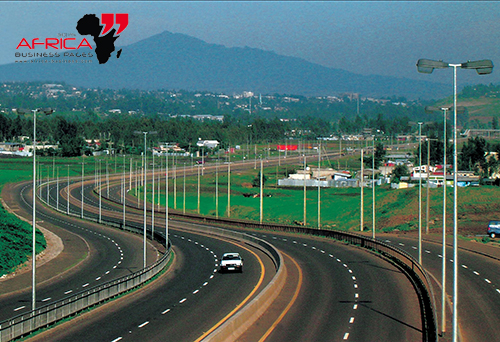
One of the fastest growing economies in Africa, Ethiopia, has an ambitious plan to cut a green, sustainable path to becoming a middle-income country by 2025. Along the way, the country faces growing urban migration and rising demand for food—challenges that are linked by, and depend on, roads for access, supply and mobility. In 1997, the total road network in Ethiopia was 26,550 kilometers. By 2014 it reached 99,522 km. For the country to reach its ambitious growth targets it’s aiming to double this to over 200,000 km by 2020. But new roads in Ethiopia and across sub-Saharan Africa often change the landscape, bringing dust, flooding and erosion. The impact is felt most by rural communities. Roads can negatively affect water flows to wetlands, block fish movements and cause landslides, as well as impact the livelihoods of millions of people. There is a solution: an approach to road building developed by Dutch social enterprise MetaMeta shows that it’s possible to reduce the impact of new roads and support food production by harvesting excess water. Under a project rolled out in Ethiopia as well as nine other countries including Bangladesh, roads are being built using innovative designs and drainage structures to collect water caused by flooding. This has solved an infrastructural issue while conserving water that can be used for crops and to feed livestock. Well built roads Practitioners at MetaMeta found that more than a third of households in Tigray, northern Ethiopia, reported flooding as a result of new roads with negative effects on crop production for around one in ten households. The study found that poor road construction can lead to soil erosion on farms and plots of land hugging the roadside. In addition, construction can increase the cost of road maintenance and repairs. This in turn limits transport options, including restricting access to markets, schools and hospitals. The net cost is damaged livelihoods. One solution, developed by MetaMeta, helps both mitigate the impact of new roads and support food production by harvesting excess water with “smart roads”. A project called Roads for Water is testing the concept. Funded by the Global Resilience Partnership, an independent partnership of public and private organisations focusing on the most vulnerable people and places, this project uses innovative road concepts, designs and drainage structures to collect water caused by flooding. For example, roads can route water to storage ponds or underground aquifers. Road drifts can help to retain water in dry riverbeds, and ensure systematic spreading of floodwaters. By harvesting rainwater, communities living near road networks can increase their resilience to shocks such as floods and droughts. In Ethiopia the project showed that $1,800 per km investment is sufficient to implement such measures, and can directly benefit over two million people. This compares favourably with annual maintenance expenditures per kilometer of $1,100 per year on rural roads in sub Saharan Africa and a periodic maintenance of $11,200 often incurred from water damage. These smart roads are increasing resilience to shocks, such as floods because water is being harvested and maintenance costs are reduced. They are also driving down the cost of road construction through, for example, the reuse of borrow pits for permanent water storage rather than requiring them to be backfilled. This is a considerable cost saving measure and additionally creates a local water resource. In Bangladesh, for example, smart roads are helping build resilience to floods that submerged a third of the country last year. If countries like Ethiopia and Bangladesh are to become more resilient they will need innovative solutions to an increasingly uncertain climate. The importance of building resilient roads will only intensify as populations grow and countries develop. Globally, an estimated 900 million rural people still don’t have access to road and transport infrastructure. The investment gap on global roads is expected to approach $1.6 trillion per year for the next 40 years as increasing amounts of roads are built, especially in the developing world. But solutions for better roads won’t work unless they are driven by local ideas and are compatible with local needs and contexts. Collaboration and buy-in between local partners – from engineers to technicians, farmers, laborers and governments departments – is critical. Solutions as simple as bringing the ministry responsible for roads together with the ministry responsible for water and talking them through the challenges and opportunities can produce remarkable results. All in all, better infrastructure will result in higher FDI as well as higher trade volumes for Ethiopia – making the country a hub for trade and investment in times to come.
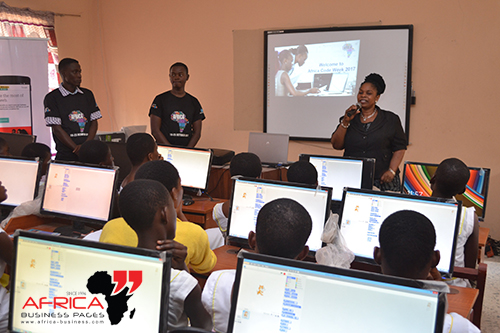
Google has released a new search app called Go in 26 African countries that would allow users to search the web faster, even with slow Internet connections. It will partner with pan-African wireless carriers such as MTN Group Ltd. and Vodacom Group Ltd. to preload the app on some of their low-end devices. The internet giant has also adapted the voice function to work better on slow connections, even as basic as 2G networks, according to Google Africa Chief Marketing Officer Mzamo Masito. “Weak data connectivity, high data costs and low storage space often make it hard for people to get the most out of the internet,” he told reporters on Thursday. “Google Go is built to handle these challenges.” U.S. tech giants see Africa as a relatively untapped market for smartphones and services such as web search and social media. Over the last few months, Google has been releasing lightweight operating “Go” systems of its popular apps for less capable phones including Gmail and Google Assistant. Last year, it launched YouTube Go in Nigeria, an “offline first” version of the video sharing platform, allowing users to preview and download videos, rather than stream, and essentially save on data costs. The app’s release is part of a recognition of how high data costs, inadequate digital infrastructure, geographical locations, and scarcity of content in local languages keep many Africans offline. By 2020, there will be 535 million unique mobile subscribers in sub-Saharan Africa, up from 420 million in 2016 – a subscriber base that is growing faster than any other region globally. Internet bandwidth capacity is also growing fast while mobile broadband connections are set to reach half a billion by 2020, becoming the driving force behind innovation, financial inclusion, and access to services ranging from solar power to education, and insurance. Younger consumers in sub-Saharan Africa are increasingly demanding quicker internet speeds and cheaper phones to go about their business, while MTN and Vodacom see the digital space as their fastest-growing market. The new app will be available in 26 countries in sub-Saharan Africa and will be pre-installed on all Android Oreo devices. The company also plans to make it available in other emerging markets, including India, Brazil and Indonesia. Africa Business Pages (africa-business.com), on the other hand, is also offering free listings for African businesses. You can list you company by registering here.
Africa: Ripe for Business: Export to Africa and Reap the Benefits
folder_open Articles , Business Outlook
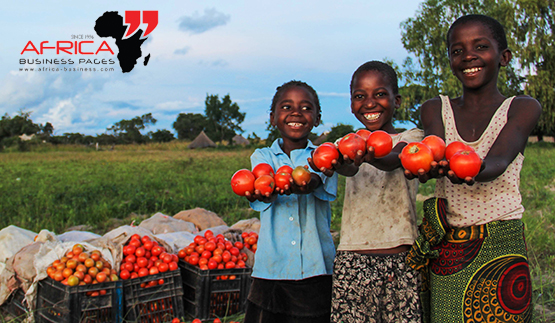
Currently, 6 of the world’s 10 fastest growing economies are in Africa, and the ease of doing business in Africa is improving to the extent that a good number of countries (including South Africa, Ghana, Mauritius and Tunisia) now outperform China, India, Brazil and Russia. In addition, FDI inflows to Africa have demonstrated year-to-year growth since 2010 and now amount to US$ 50 billion. The key reasons behind this growth surge included government action to end armed conflicts, improve macroeconomic conditions, and undertake microeconomic reforms to create a better business climate. To start, several African countries halted their deadly hostilities, creating the political stability necessary to restart economic growth. Next, Africa’s economies grew healthier as governments reduced the average inflation rate from 22 per cent in the 1990s to 8 per cent after 2000. They trimmed their foreign debt by one-quarter and shrunk their budget deficits by two-thirds. Finally, African governments increasingly adopted policies to energize markets. They privatised state-owned enterprises, increased the openness of trade, lowered corporate taxes, strengthened regulatory and legal systems, and provided critical physical and social infrastructure. Nigeria privatized more than 116 enterprises between 1999 and 2006, for example, and Morocco and Egypt struck free-trade agreements with major export partners. Although the policies of many governments have a long way to go, these important first steps enabled a private business sector to emerge. Together, such structural changes helped fuel an African productivity revolution by helping companies to achieve greater economies of scale, increase investment, and become more competitive. After declining through the 1980s and 1990s, the continent’s productivity started growing again in 2000, averaging 2.7 percent since that year. These productivity gains occurred across countries and sectors. This growth acceleration has started to improve conditions for Africa’s people by reducing the poverty rate. But several measures of health and education have not improved as fast. To lift living standards more broadly, the continent must sustain or increase its recent pace of economic growth. To be sure, Africa has benefited from the surge in commodity prices over the past decade. Oil rose from less than $20 a barrel in 1999 to more than $145 in 2008. Prices for minerals, grain, and other raw materials also soared on rising global demand. Political change in Africa is rapidly happening in unexpected pockets. Observers are actively monitoring situations in certain countries, in particular South Africa, Ethiopia, and Zimbabwe, with an excitement for future socio-political change that could follow these headwinds. Yet all consideration of the current political movements suggest that the imagined economic change is not necessarily an easy sequel to the political prologue. Political change is also sweeping across the African contient: Ethiopia The unexpected (or expected, depending on who you ask) resignation of Ethiopian Prime Minister Hailemariam Desalegn, in theory, paves the way for change. But many insiders are not exactly sure what path will be chosen by the ruling Ethiopian People’s Revolutionary Democratic Front. Faced with ongoing demonstrations that began sporadically in 2015, the ruling party has two options in front of it: Choose someone open to allowing increased political freedom or Appoint a party hardliner to shut down the dissent. For many political analysts, the arrival of Desalegn’s resignation day is an odd juxtaposition with the rising economic prowess of the country. Ethiopia, as it goes, always craftily kept political freedom and economic growth in two separate buckets of discussion, especially as the growth justified the political environment in which it excelled. But the death of the pervasive and endearing prime minister Meles Zenawi in 2012 opened the door for a discussion on politics in conjunction with economic transition, theoretically blurring the line that separated the two subjects in public discourse. The economics of the country could possibly have to account for its internal politics. Yields on Ethiopia’s $1 billion 2024 Eurobonds fell a few basis points after the government announced a state of emergency following the prime minister’s resignation. That drop was not significant enough to stir major concern amongst investors in the country. But investors will watch closely to see how the next few months play out. Two things are increasingly truer today than yesterday: (1) Ethiopians think protests can affect political change and the stance of the country’s political leaders, and (2) markets and investors have punished other countries for instability (ask Kenya in late 2017 and South Africa for the last two years). Zimbabwe The death of Zimbabwe opposition leader Morgan Tsvangirai quickly followed the exit of former President Robert Mugabe. With no clear leader to fill the power vacuum in the opposing Movement for Democratic Change (MDC) party, the ruling ZANU-PF may face little opposition in a presidential election expected before July this year. Tsvangirai won, at least, in the first round of the vote in 2008, but eventually lost a disputed election to Mugabe and later formed a unity government with him. Some opposition leaders are suggesting that the death of Tsvangirai may encourage President Emmerson Mnangagwa to ensure the Zimbabwe election stays on track with timing. That positive, in the eyes of political critics, is not too positive if a true debate on the economy and the general direction of Zimbabwe cannot be had without a face or voice to put opposite President Mnangagwe. The reuniting of Tsvangirai last year with his former allies, Welshman Ncube and Tendai Biti, who both left Tsvangirai’s wing of the party, to run together in the 2019 elections was a boost to the opposition’s spirits in the midst of flailing motivation and energy in the anti-Mugabe camp. Yet now the question becomes whether the former allies can push forward in Tsvangirai’s memory and Mugabe’s absence. No one truly knows where the allegiances may fall. Some observers suggest that ZANU-PF is not a tight-knit as advertised. Even if true, ZANU-PF has proven its ability to win national elections. Regardless, the economics in the country require change. Zimbabweans need infrastructure, an economic rebound, and jobs among other things. But who has the new ideas and energy in 2018 to endure a long process in rejuvenating the economic spirits of businesses and locals? Investors and markets – excited to have a serious discussion on Zimbabwe again – want to reward the country for political change. Yet the question may still be whether Zimbabwe cares about what outsiders are saying or what the market is selling it. South Africa The rise to the presidency for Cyril Ramaphosa in the immediate aftermath of the resignation from South African President Jacob Zuma spells opportunity for the challenged country. Investors, markets, and pundits alike have punished Africa’s most developed economy for Zuma’s leadership and rule. It only follows that the stark opposite leader – admired in the business community for his successes and once pursued by the beloved Nelson Mandela to be his deputy president – should spell relief for investors and potentially have a Trump-esque bump on markets in the early days. Yet the ‘dawn of a new day’ in South Africa may require more than a simple change of leadership. The South African mining sector requires wage and ownership changes as well as tax changes to spur more investment and strengthen a buried gem (no pun intended) in the country. The economy requires a solution to energy troubles. The state-owned power company Eskom remains a trouble spot for the country with regards to its poor balance sheet performance. And the country needs jobs to combat unemployment and boost consumer spending as nearly every consumer and retail-based related sub-sector complains that South Africans cannot afford to spend despite their usual appetite for doing so. Beyond the economics and the politics, President Ramaphosa will have to battle pockets of nationalism within the country that want to restrict land rights, fight back against privatization, and avoid the dirty fights to reform certain government institutions, such as the South African Revenue Service. At the end of the day, political change and the arrival of President Ramaphosa may be a breath of fresh air, but the ruling party cannot inhale too long with too much on its plate to do and with an impending general election. A few early reforms may be the difference between winning and losing for the ruling ANC in early 2019. The message to any company or investor still not in Africa is that today is the day that business in Africa is made and it might already be too late tomorrow. Africa is the now, no longer the future. Any CEO who has not presented his or her board of directors with their Africa strategy needs to get to work on such a plan and implement the plan as soon as possible in order to reap the benefits by gaining first entry into the emerging markets in Africa. The Africa train has already left the station. You are either on it or you risk becoming irrelevant.
Preliminary request for participation in the trade show
place
calendar_today
Preliminary request for visitor registration
Visitor Registration
place
calendar_today