

Browse News by Category

Nigeria Food & Beverage Market: Manufacturing & Import Growth
folder_open Foodstuff & Beverages , West Africa
Nigeria's food and beverage sector stands as a cornerstone of West Africa's economic landscape, offering immense B2B trade potential for global suppliers. Driven by a burgeoning population and evolving consumer preferences, this dynamic market is characterized by robust local manufacturing expansion and a consistent demand for diverse imported goods, making it a critical hub for regional commerce and investment.

Nigeria Oil & Gas: Indigenous Firms Drive Upstream Investment
folder_open Business Outlook , West Africa
Nigeria's oil and gas sector is undergoing a profound transformation, driven by the increasing prominence of indigenous companies reshaping the upstream landscape. This strategic shift presents significant B2B trade opportunities for global suppliers and investors seeking to engage with Africa's largest economy and its evolving energy industry, fostering a more localized and robust supply chain.

Nigeria Industrial Investment: Capital Markets Drive Growth
folder_open Business Outlook , West Africa
Nigeria's industrial sector is experiencing transformative growth, driven by strategic investments and robust capital market activity. This expansion creates significant B2B trade and supply chain opportunities across West Africa, positioning the nation as a manufacturing hub. Large-scale projects, often spearheaded by local conglomerates, are pivotal in diversifying the economy beyond traditional oil revenues, fostering self-sufficiency, and attracting both domestic and international capital.

How China succeeded in capturing the emerging markets in Africa
folder_open Articles , Business Outlook , East Africa , West Africa
At the turn of the 21st century, Africa’s import landscape was still largely a reflection of its colonial past. European trading houses from France, the United Kingdom, Germany, and Italy dominated the supply of automobiles, industrial machinery, pharmaceuticals, and consumer goods across the continent. Fast-forward twenty-five years, and the commercial map of Africa has been completely redrawn. China has not only overtaken every European nation and the United States to become Africa’s largest bilateral trading partner for more than fifteen consecutive years, but has also embedded itself into the daily economic life of nearly every African household and enterprise.

Why Dubai has become a favourite sourcing point for African SMEs
folder_open Articles , Business Outlook , East Africa , West Africa
Walk through the bustling wholesale lanes of Deira’s Sabkha district, Murshid Bazaar, or the sprawling showrooms of Jebel Ali and Dragon Mart on any given weekday, and you will hear animated price negotiations in Swahili, Hausa, Yoruba, Amharic, and French. Over the past two decades, Dubai has evolved from a regional Gulf port into the undisputed wholesale supermarket for small and medium-sized enterprises (SMEs) across Africa. While China remains the world’s factory floor for mega-importers ordering ten containers of a single item, Dubai has captured the heart of Africa’s vibrant SME sector—the boutique owners, spare-parts stockists, electronics dealers, hardware merchants, and pharmacy chains that drive everyday commerce across the continent.

Nigeria SUV Market: Hyundai Expands West Africa B2B Fleet
folder_open Automobiles Sector , Business Outlook , West Africa
Nigeria's dynamic automotive market, a cornerstone of West Africa's economic landscape, is witnessing a significant strategic move as Hyundai Motors Nigeria expands its Sport Utility Vehicle (SUV) line-up. The introduction of the Hyundai Mufasa and Hyundai Grand Creta is not merely about new models; it signifies a calculated response to evolving consumer demands and a deeper commitment to the region's burgeoning B2B automotive sector. For global manufacturers, importers, and ancillary service providers, this expansion underscores Nigeria's enduring potential as a pivotal market for vehicle sales, aftermarket services, and long-term investment in distribution infrastructure. This development is set to reshape competitive dynamics and create fresh opportunities across the entire automotive value chain.

Nigeria is a key African market, accounting for almost half of West Africa’s population, and the country boasts one of the largest youth populations in the world. The country also has an abundance of natural resources, with vast oil and gas reserves, and significant agricultural potential. Nigeria is a member of the Organization of the Petroleum Exporting Countries (OPEC) since 1971.

Nigeria's Booming Consumer Market
folder_open West Africa
Nigeria has been making steady progress in diversifying its economy away from the oil sector. In light of the Nigerian government’s “Nigeria Vision 20: 2020”, it aims to increase the share of the manufacturing sector in economic output to 15-30% and the services sector to 45-75%, while lowering the shares of agriculture and oil.
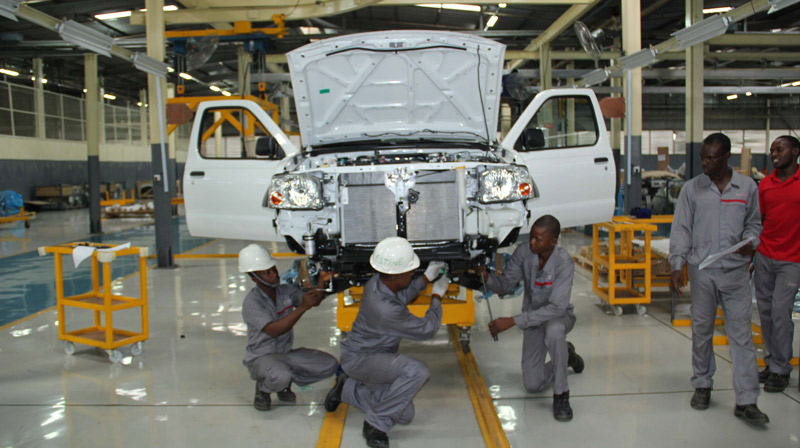
With the imminent ablishment of trade barriers under the African Continental Free Trade Area (AfCFTA), Ghana is poised to overtake Nigeria by becoming a gateway to the rest of West Africa, and a market leader in new car sales. The government of Ghana is also offering 10-year tax breaks to the automotive manufacturing industry in a bid to make Ghana the regional hub for car assembly and boost car sales in the local and regional markets.

Nigeria Uses Drones For Delivery
folder_open West Africa
Nigerian-based medical logistics startup, LifeBank will be adding drone delivery to its methods of transportation. The company is the first African-led company to implement Beyond Visual Line Of Sight (BVLOS) flights for healthcare logistics. Unlike Visual Line Of Sight (VLOS) flights where the pilot has to see their unmanned aerial vehicles (UAVs) or drones at every time, for BVLOS, drones can go beyond the sight of the pilot without human interference. This means more reach into remote and previously inaccessible areas.
Preliminary request for participation in the trade show
place
calendar_today
Preliminary request for visitor registration
Visitor Registration
place
calendar_today